


As the world-leading producer of washable and reusable sanitary pads, Pad-Up Creations is determined to provide hygiene products with safety, comfort, and sustainability. Olivia Onyemaobi, Founder and CEO, tells us more about the award-winning initiative.
RESTORING DIGNITY WITH SUSTAINABLE SANITARY SOLUTIONS
Driven by a passion for women’s health and well-being, Pad-Up Creations (Pad-Up) is a one-of-its-kind social enterprise dedicated to providing sustainable, innovative menstrual health and hygiene solutions.
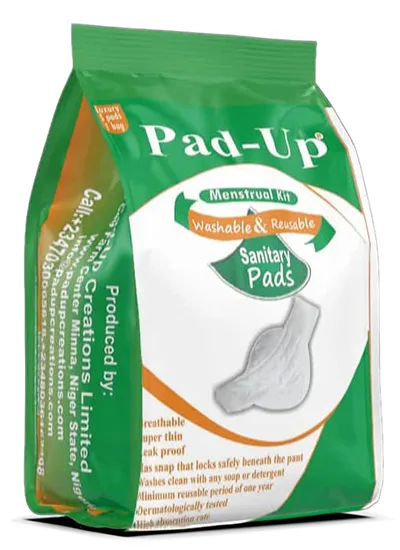
The organisation is the first certified manufacturer of washable and reusable sanitary pads in Nigeria, designed to be chemical-free, eco-friendly, and durable for over one year of use.
“Our initial focus was on girls and women at the lower economic pyramid. Now, we have those more conscious of their health and that of the planet championing the use of our products,” introduces Olivia Onyemaobi, Founder and CEO.
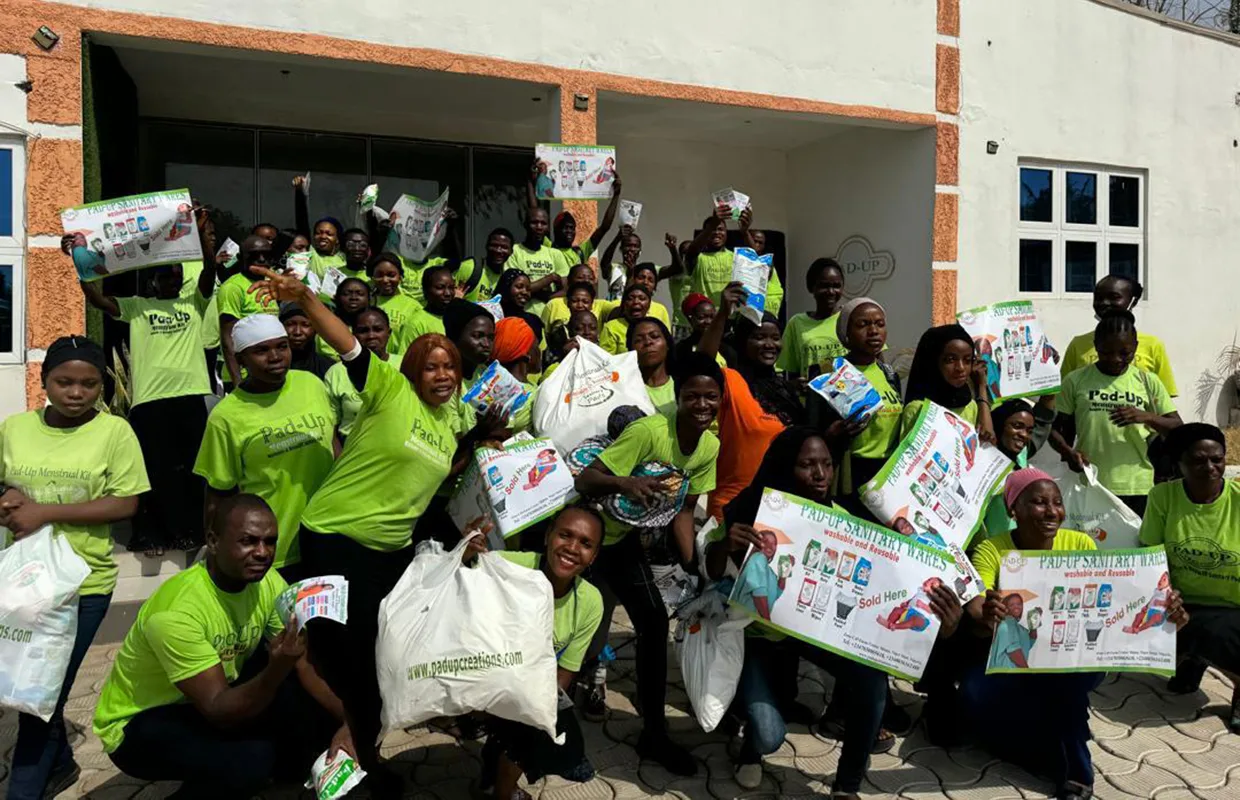
The company’s flagship product is the Pad-Up Menstrual Kit – an antimicrobial, reusable sanitary pad. Its expanded product line includes reusable period-padded underwear, baby diapers, adult diapers, incontinence underwear, panty liners, sanitary wipes, menstrual hygiene booklets, and more.
Currently, Pad-Up operates across 21 African countries, having reached over 17.2 million girls and women and provided menstrual hygiene training to more than 837,000 individuals onsite.
Supported by a team of 517 staff members and a vast distribution network of over 23,000 women micro-sales agents, the company’s impact is driven by a diverse client base, including corporate organisations, local and international non-governmental organisations (NGOs), government agencies, development organisations, and community-based institutional partners.
“In January, we were announced as one of the 2026 Schwab Foundation Award winners, joining a community of 510 social entrepreneurs and innovators that have collectively improved the lives of over 950 million people in 190 countries,” prides Onyemaobi.
The inspiration and drive behind Pad-Up, and its goal to champion accessibility to safe, comfortable, and sustainable hygiene products, stem from Onyemaobi’s own lived experience.
“Whilst working in a commercial bank in Nigeria, I found several newspaper publications reporting on the sexual abuse of girls. It was increasing daily, and I felt I needed to challenge that norm, especially having experienced that as a teenager,” she insights.
Dedicating her hourly lunch breaks to visiting schools to educate and administer therapy with sexually abused girls to help them overcome their trauma, Onyemaobi found that when revisiting three months later, most of the girls had returned to the men who had initially abused them.
“We conducted private sessions and discovered that over 89 percent of the 1,500 rehabilitated girls said they lack access to sanitary pads and lived with families from low-income backgrounds or who didn’t care how they care or their period,” she explains.
“They use unhygienic materials like foam, rags, feathers, sitting on sand for hours to care for their periods, increasing their exposure to infections. Over 73 percent miss school because they want to avoid bullying.”
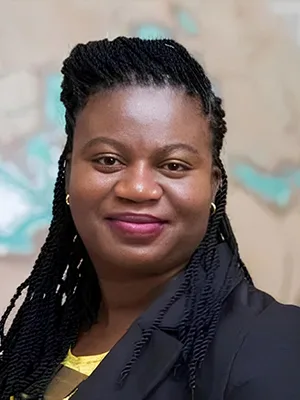
“Access to menstrual products is a fundamental driver of gender equity in education”
Olivia Onyemaobi, Founder and CEO, Pad-Up Creations
DRIVING GENDER EQUITY
With a deep understanding of the importance of comfort and reliability, Pad-Up believes in innovation, creativity, and quality, striving to make products women can rely on.
“Our mission centres on delivering innovative, sustainable sanitary solutions that do more than just provide a product – they restore dignity,” Onyemaobi enthuses.
The organisation achieves this by leveraging a skilled, motivated workforce and investing in rigorous training and a zero-tolerance approach to quality, ensuring every reusable product meets international health standards. Motivation originates from Pad-Up’s circular economy model, where the team watches manufacturing waste transform into value-added products like soft furniture through the company’s subsidiary, Kommmb Innovations.
Equally, Pad-Up recognises the crucial links between access to menstrual products, girls’ education, and long-term social participation.
“Access to menstrual products is a fundamental driver of gender equity in education,” details Onyemaobi.
Most families are unable to provide menstrual pads on a monthly basis, forcing the girls to improvise with other materials that can lead to infections. Statistics show that one in 10 girls in sub-Saharan Africa misses school during their period, which can amount to a staggering 20 percent of a school year. Such absenteeism often leads to the girls falling behind in core subjects, increasing the rate of sexual abuse, adolescent pregnancy, and early marriages.
“Without secondary education, a woman’s long-term earning potential and ability to participate in the formal economy are severely curtailed. Providing a kit that lasts for years, rather than days, breaks this cycle of poverty,” Onyemaobi educates.
Additionally, the company supports myriad communities by tailoring menstrual health initiatives to local contexts, including the role of women-led distribution networks, digital support systems, and male engagement.
Pad-Up’s women-led micro sales agents are empowered local entrepreneurs who understand their community’s cultural nuances. They are trained not only to distribute sanitary pads but also champion menstrual education.
For digital support, the company bridges the information gap by using tech-driven platforms to reach remote areas and provide comfort at home. The sales agents can place their orders through the online platform, track delivery, and manage inventory, enabling Pad-Up to give support when needed.
To encourage male engagement, the company actively includes men and boys in its advocacy to dismantle ‘period shame’ that leads to social exclusion.
“Men are also part of our menstrual hygiene trainers. We have a project called ‘walk in her shoes’ where boys and men are given menstrual pads and asked to wear them throughout the event. They end up becoming the best support system after this first-hand experience,” explains Onyemaobi.
“Our mission centres on delivering innovative, sustainable sanitary solutions that do more than just provide a product – they restore dignity”
Olivia Onyemaobi, Founder and CEO, Pad-Up Creations
CHALLENGING THE NORM
Currently, Pad-Up is working on a variety of projects and objectives in order to advance its footprint.
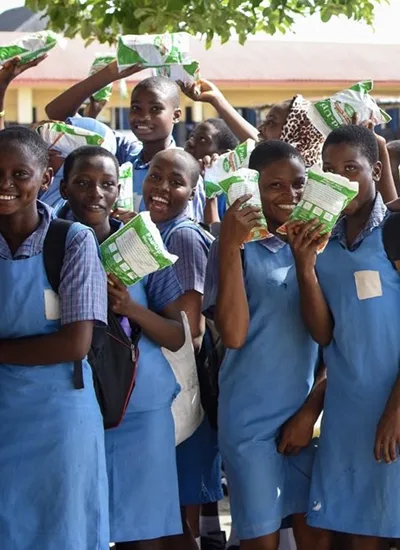
One such initiative that has already had a significant impact is the Period Access project, which was created for the large-scale distribution of free menstrual pads to vulnerable girls thrice a year to help them remain in school. The project is funded by different corporate organisations, private individuals, government, and international organisations.
Continually investing in this project in a strategic effort to support educational retention, Pad-Up sponsored the distribution of over 2,000 free menstrual kits to girls in Prampram, Ghana.
“This initiative directly addresses local socio-economic challenges where girls often face pressures to leave school prematurely. By providing sustainable menstrual health solutions, we aim to eliminate a primary barrier to attendance and empower these students to prioritise their academic futures and long-term development,” Onyemaobi notes.
Another endeavour is the WePower project, which emphasises the economic side of the company’s mission – training and equipping women in rural areas to become independent distributors and foster financial autonomy.
Additionally, the company has recently created Pad-Up Pulse, a comprehensive health education platform designed to help young people navigate their health journey with confidence. The platform has proudly reached over 2.7 million users, including 600,000 boys, and provides interactive games, learning resources, and an artificial intelligence (AI)-powered assistance to answer sensitive questions about reproductive health.
“Post-quiz surveys show a significant knowledge improvement in nearly two million users, directly combating myths and improving self-confidence,” enlightens Onyemaobi.
In parallel, Pad-Up has launched a menstrual change fellowship to train 70 men and women in menstrual hygiene and reproductive health. With over 5,000 applicants in the first 48 hours, it was immediately evident how people desperately want to contribute to a positive change.
“I am also proud to say that my work has been recently recognised by the Schwab Foundation Awards, which highlight outstanding social entrepreneurs and innovators driving systemic change worldwide. Supporting social innovation in this way is incredibly important, driving inclusive economic progress and creating a more equitable world of entrepreneurs,” announces Onyemaobi.
MAKING PERIODS ACCESSIBLE
A challenge that Pad-Up is currently facing is the impact of recent policy considerations, including the taxation of menstrual products and gender inclusion politics.
“Taxation remains a significant barrier, as when menstrual products are treated as luxury goods rather than essentials, it folds inequality into the architecture of public finance. Since 2016, we have been advocating for the removal of VAT and import duties on menstrual health materials across African countries, following the lead of Kenya and Rwanda,” Onyemaobi insights.
“Policies must recognise that menstrual health is a matter of workplace and school infrastructure. True inclusion means providing facilities and products as a standard, not an afterthought.”
As Pad-Up continues to look towards a future of genuine equality and the destigmatisation of periods, it is focusing on its ‘Vision 5 in 5,’ which comprises being amongst the top five world-leading organisations manufacturing women’s sanitary wares in the next five years.
“We are working daily to increase our production capacity to meet the increasing demand and are aiming to connect 50 million girls and women to accessible menstrual pads in the next 14 months,” confidently concludes Onyemaobi.
With current distribution spanning nearly two dozen countries, Pad-Up is also working to expand its sales hub to five additional countries by 2027, ensuring a proper coordinated sales distribution and training, whilst finalising the process of signing five franchises by early 2027.
This article was produced by the editorial team at Africa Outlook and published as part of the Outlook Publishing global network of B2B industry magazines.
Outlook Publishing delivers industry insights, company stories, and sector coverage across manufacturing, mining, construction, healthcare, supply chains, food production, and sustainability.
Africa Outlook provides ongoing coverage of organisations and developments shaping industries across Africa.