




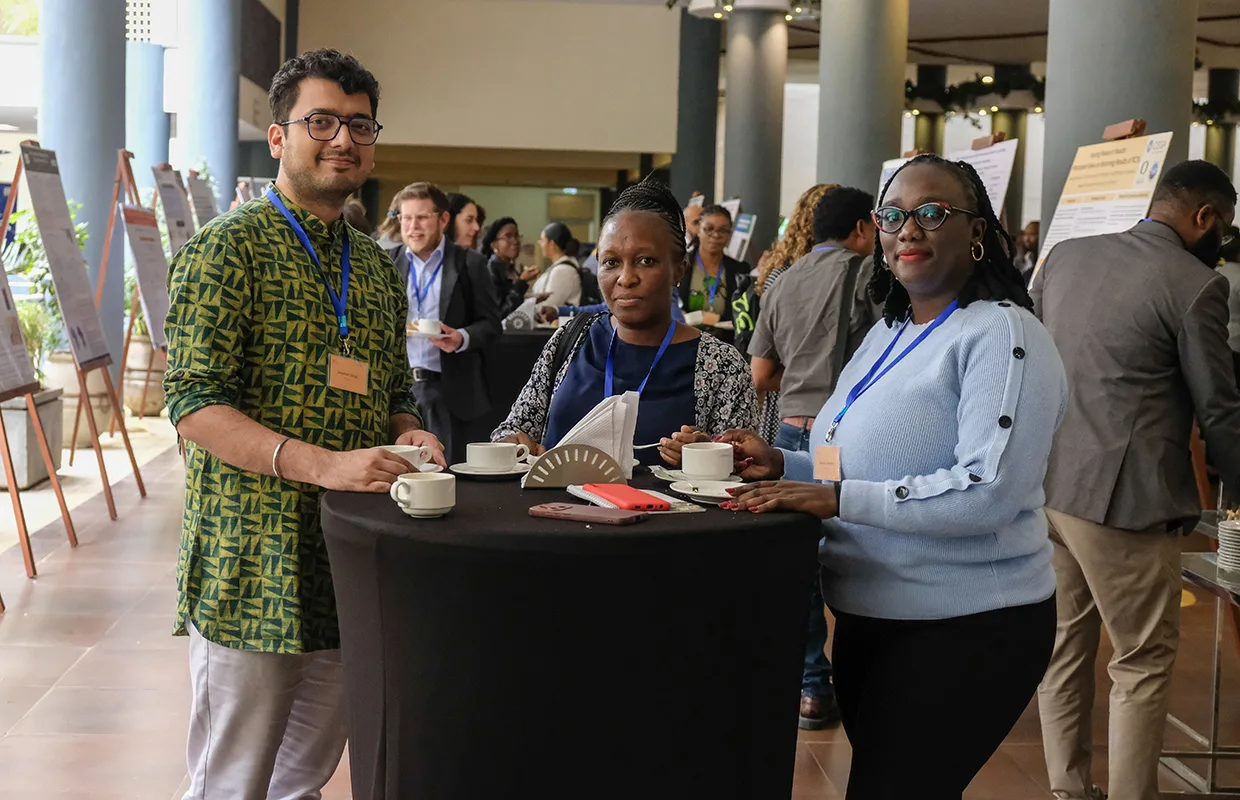
Lisa Hawkes, Global Sustainability Senior Manager at Unilever, and Wanjiku Kiarie, Senior Associate at Busara, examine why dignity and recognition for sanitation workers are fundamental to public health in sub-Saharan Africa.
TRANSFORMING PUBLIC HEALTH IN SUB-SAHARAN AFRICA
“I often get the impression that most people despise us.” These words, from a 35-year-old female municipal solid waste management supervisor in South Africa (SA), sum up how most sub-Saharan African sanitation workers think the public views them. Yet, as the collectors of waste and the cleaners of public spaces like streets and toilets, they are central to disease prevention.
With over 178,000 cholera cases reported in East and Southern Africa between January 2024 and March 2025, these sanitation workers are the first line of defence against such deadly outbreaks.
Waste and sanitation workers continue to face social stigma, unsafe working conditions, and low pay, despite their essential role.
Driving systemic change and cultural shift that will turn sanitation work into a respected profession and address sub-Saharan Africa’s public health crisis will require both the improvement of working conditions and reshaping of societal perceptions.
Social stigma and exclusion are daily realities for sub-Saharan Africa’s sanitation workers. Being shunned or mocked often leads to feelings of internalised shame and low morale.
In Kenya, for example, sanitation workers are regularly excluded from community gatherings, whilst in Ghana, they are called derogatory names, like ‘selem piagra’ – meaning ‘toilet washer’. In SA, sanitation work is commonly seen as low-status and male-dominated, so women workers have an increasingly hard time.
What’s true across all three countries is that informal workers face low and inconsistent pay, alongside job insecurity – further undermining morale and reinforcing the overarching perception that wider society doesn’t deem this work worthy of respect.
This is compounded by unsafe and undignified working conditions, including inadequate protective equipment that exposes workers to significant health risks in terms of disease or toxic pollution. The scope for improvement is vast.
A highly motivated, well-respected, properly protected, and adequately compensated workforce would deliver better public health outcomes.

THE IMPORTANCE OF PERSONAL MOTIVATORS
Historically, efforts to improve sanitation in the region have prioritised infrastructure, technology, and regulation.
Whilst these are clearly important, the requisite systemic change will only be possible if sanitation workers themselves are put at its heart. Possessing a unique understanding of the challenges on-the-ground, they are the key to unlocking transformation.
That’s why our latest research – undertaken by the social scientists at Busara and funded by impact accelerator TRANSFORM – focuses on the experiences of sanitation workers. Unlike existing literature, it shifts the lens to include human factors, recognising that psychosocial and behavioural dimensions are vital.
Focused on Ghana, Kenya, and SA, the research found that sanitation workers consistently display remarkable resilience, pride, and solidarity – despite their adversities.
Often, they develop supportive networks, based on cultural notions of family responsibility and a purposeful commitment to cleanliness and public health. Such adaptive strengths are not just coping mechanisms, but powerful entry points for systemic change.
When it comes to improving the region’s sanitation sector, these personal motivators for workers to do their job well are just as crucial as external motivators, such as fair pay, public recognition, supportive management, and safe workplaces.
For this reason, our research offers a fresh perspective on the kinds of interventions that can effect real-world change.
They include storytelling communications campaigns to reduce the social stigma around working in the sanitation sector, peer-led worker support groups, and the engagement of trusted community leaders as advocates for sanitation workers.

COLLABORATION IN SUPPORT OF SANITATION WORKERS
Meaningful change in the sector will require strong, multi-level collaboration across policy, practice, and research, which should still be focused on the workers themselves.
For instance, governments and municipal authorities should lead the integration of dignity and motivation initiatives into sanitation workforce programmes and urban development strategies.
Meanwhile, private sanitation firms and social enterprises can pilot and scale behavioural change initiatives, particularly those that promote recognition, professional growth, and peer support.
Civil society organisations and worker associations are key when it comes to facilitating participatory engagement. They can amplify worker voices and sustain advocacy for wider change.
At the research and funding level, coordinated partnerships between development agencies, behavioural science labs, and implementation partners can ensure rigorous, policy-relevant evidence and shared learnings based on workers’ real-life experiences.
Dignity and recognition for waste and sanitation workers is not a ‘nice to have’ but fundamental to improving sanitation in sub-Saharan Africa which, in turn, is essential for better public health.
Focusing on workers’ perspectives and embedding behavioural and participatory approaches into sanitation programmes is how to create more resilient, equitable, and effective systems.
No worker should ever feel despised because of what they do, especially when it’s so vital to everyone’s health.
This article was contributed by a guest author and published by the editorial team at Africa Outlook, part of the Outlook Publishing global network of B2B industry magazines.
Outlook Publishing features leadership insights, industry perspectives, and company stories from organisations shaping sectors including manufacturing, mining, construction, healthcare, supply chains, food production, and sustainability.
Africa Outlook highlights the organisations, leadership teams, and projects shaping Africa’s dynamic business and industrial landscape.