




Bannerman Mining Resources Namibia is at the forefront of leveraging the nation’s rich resources to foster sustainable industrial growth and enhance energy security, positioning Namibia as a leader in the global nuclear fuel market. Interim CEO, Danie van Aswegen, tells us more.
UNLOCKING A URANIUM UPGRADE
As a country that boasts abundant natural resources, Namibia is pivotal to the global mining industry, which is a cornerstone of its economy.
Amongst its significant contributions, the nation stands as the world’s third-largest uranium producer, harnessing the valuable radioactive metal to drive industrial growth and bolster energy security.
Key players in these sectors are Bannerman Mining Resources Namibia (BMRN) and Australian-listed Bannerman Energy.
BMRN is a 95 percent-owned subsidiary of Bannerman Energy, with the remaining five percent owned by the One Economy Foundation (OEF) of Namibia. Notably, its world-class flagship asset is the advanced Etango Uranium Project (Etango), located in Namibia’s Erongo region, known for its rich mineral resources.
The project possesses a globally significant uranium mineral resource endowment of 207 million pounds (lbs) of contained yellowcake (U3O8) – a powdered form of uranium concentrate obtained from leach solutions – at a cut-off of 100 parts per million (ppm) U3O8.
“BMRN received the exploration licenses for Etango in 2005 – one of the world’s largest undeveloped uranium projects, underpinned by more than 15 years of exploration and feasibility work,” introduces Danie van Aswegen, Interim CEO, who has over 25 years of mining industry experience.
Indeed, the project’s definitive feasibility study (DFS), completed in 2022, confirmed the strong technical and economic viability of conventional open-pit mining and heap-leach processing at an eight million tonne (MT) per annum rate, producing 3.5 million lbs of U3O8 annually.
In 2024, a scoping study further outlined potential expansion to 6.7 million lbs of U3O8 per year.
Importantly, Etango is fully permitted with all the necessary environmental approvals and a mining licence in place. BMRN is now advancing key workstreams towards a final investment decision (FID).
PIONEERING FUTURE PRODUCTION
Namibia is a prominent uranium jurisdiction with a 50-year history of production and export, supported by strong government and community backing, ensuring a favourable environment for development, characterised by political stability, security, and a strict rule of law.
Crucial uranium mines include Rössing, owned by China National Nuclear Corporation (CNNC); Langer Heinrich, owned by Paladin Energy; and Husab, owned by China General Nuclear Power Group (CGN).
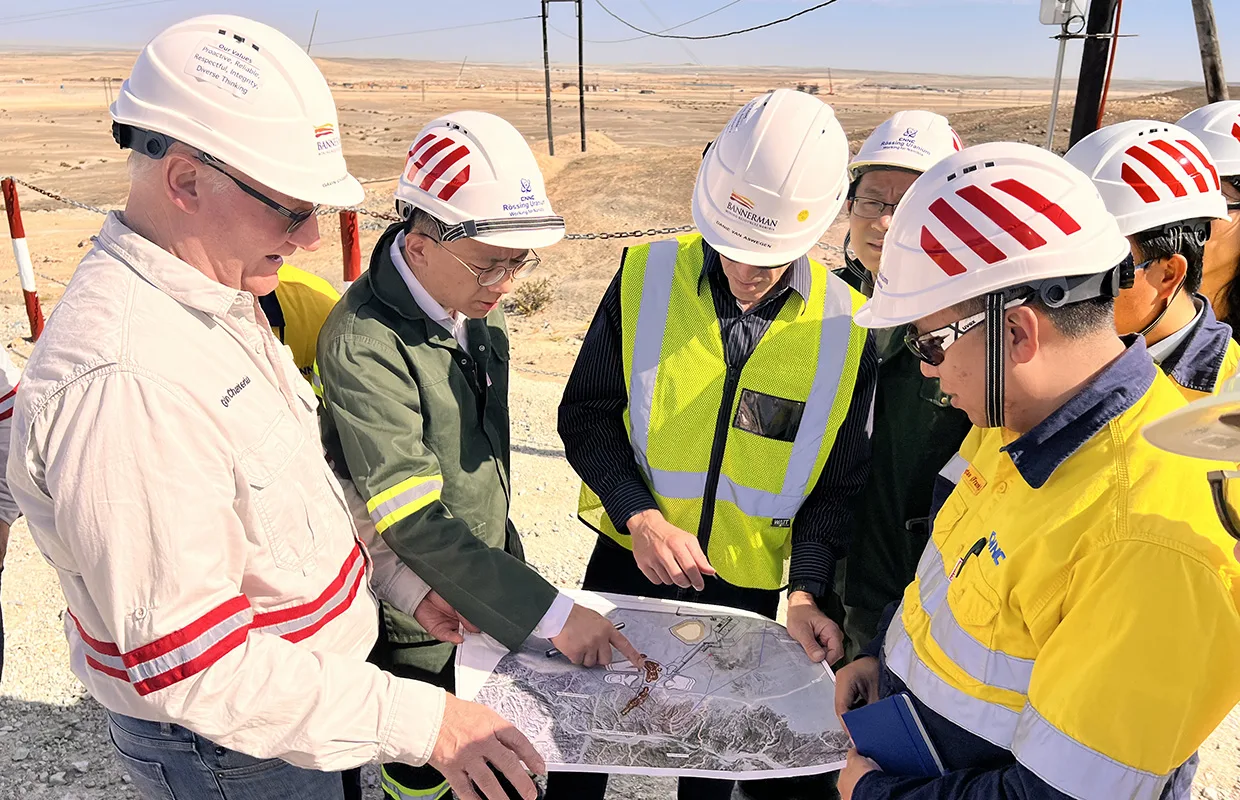
CNNC is a major nuclear utility and uranium consumer, classified as Tier 1 due to its scale and credibility. The company is expanding, with 18 nuclear reactors under construction or approved, and has successfully operated the Rössing mine in Namibia since 2019.
By developing Etango, BMRN is placing itself amongst the major players in the country’s uranium resources.
“We chose to develop Etango because it combines globally significant scale, strong project economics, and a streamlined pathway to development in one of the world’s premier uranium jurisdictions,” Van Aswegen explains.
“There is clear scalability for future expansion as market conditions strengthen. The project benefits from demonstrated processing performance through the Etango Heap Leach Demonstration Plant, which validated metallurgical performance, processing assumptions, and low technical risk supported by a simple, proven flowsheet.”
Furthermore, with long-term global uranium supply deficits forecasted, Etango is well-positioned as an advanced, development-ready project capable of supplying reliable uranium to the growing nuclear energy sector.
“The global nuclear fuel market is becoming increasingly focused on the widening imbalance between reactor requirements and projected primary uranium availability,” he observes.
“Nuclear generating capacity continues to expand through new builds, reactor life extensions, uprates, newcomer countries, and emerging technologies.”
Together, these developments are driving sustained growth in uranium consumption and placing mounting pressure on future supply.
“The central challenge for the uranium mining sector is whether sufficient new production capacity can be brought online within the required timeframe,” Van Aswegen explores.
“Even with existing producers increasing output, the market is still likely to face a meaningful deficit, underlining the importance of advancing new uranium assets towards commercial operation over the next several years.”
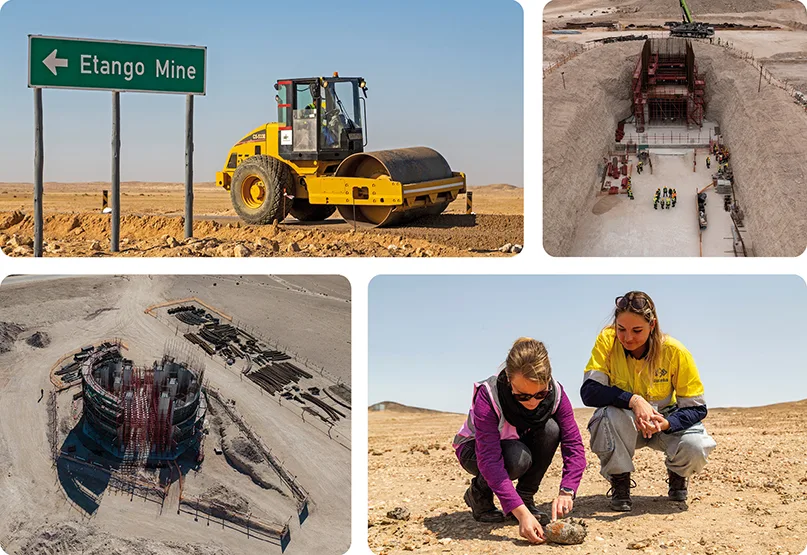
As such, Etango is poised to deliver additional uranium volumes as industry conditions tighten by the end of the decade. With advanced technology and reduced risks, it’s moving towards full-scale construction, aiming for first production in 2028.
At full capacity, it could meet the annual uranium needs of seven to eight large nuclear reactors, boosting global fuel supply during a critical time.
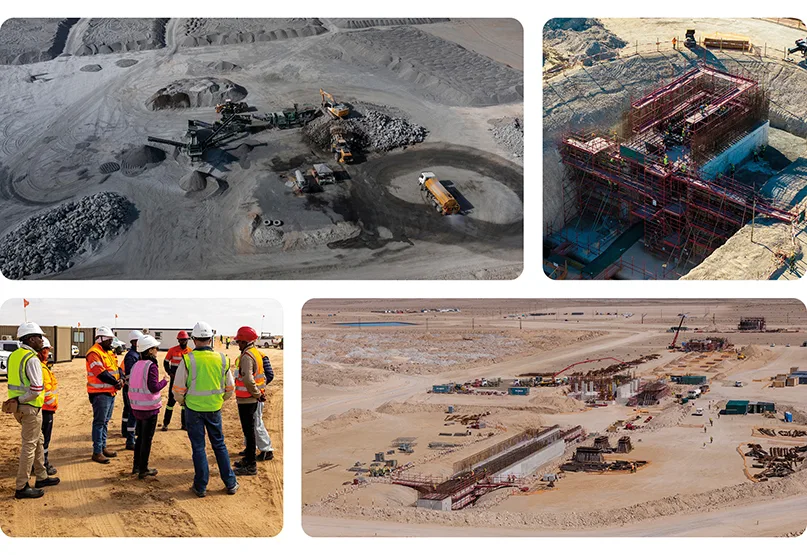
ETANGO’S ENVIRONMENTAL EMPOWERMENT
BMRN exercises best-practice environmental, social, and governance (ESG) leadership in all aspects of its business, most notably in its commitment to nuclear energy, where the company is highly respected by stakeholders in Namibia and beyond.
“Nuclear energy is vital for the global shift to a low-emissions future, supplying about 10 percent of the world’s electricity as the second largest low-carbon power source after hydropower. In this regard, it is reliable, scalable, and cost-effective, enhancing energy security and grid stability whilst supporting intermittent renewables like wind and solar.
“Moreover, beyond electricity generation, nuclear energy is expected to contribute to the decarbonisation of key industries, including heating, desalination, and hydrogen production. Additionally, the resource can also create long-term, high-skilled employment opportunities and support regional economies,” posits Van Aswegen.
As global decarbonisation accelerates, the demand for uranium is expected to rise significantly. The International Energy Agency (IEA) projects that nuclear capacity will need to nearly double by 2050 to achieve net zero goals.
BMRN’s Etango project will enhance global uranium supply, aiding the transition to a lower-carbon world. It will create 300 direct jobs and up to 5,000 indirect jobs, avoid 64 MT of carbon emissions by replacing coal-fired power, and displace 25 MT of coal equivalent.
“Since commencing operations in Namibia in 2006, we have demonstrated exemplary environmental standards,” he prides.
“We are proud of our environmental achievements, including our baseline data since 2008, innovations in drill pad rehabilitation in the Namib Desert adopted by other uranium miners, and our peer-reviewed environmental and social impact assessment (ESIA) for Etango, which secured environmental clearance.”
Furthermore, as part of the project’s development, BMRN has carefully considered environmental impacts in its design trade-offs and when selecting the process plant, with a strong focus on reducing Etango’s overall footprint whilst maintaining technical and commercial robustness.
“We are proud of our environmental achievements, including our baseline data since 2008, innovations in drill pad rehabilitation in the Namib desert adopted by other uranium miners, and our peer-reviewed ESIA for Etango, which secured environmental clearance”
Danie van Aswegen, Interim CEO, Bannerman Mining Resources Namibia
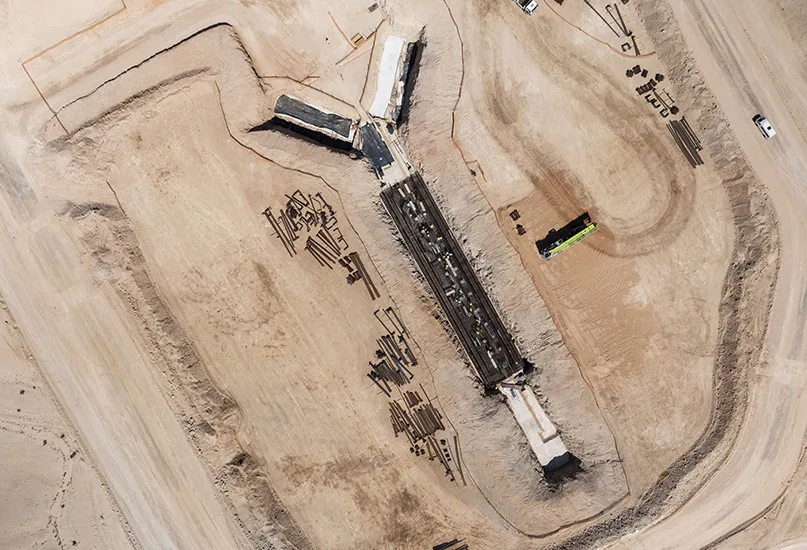
INNOVATIVE SUSTAINABLE DEVELOPMENT
Despite the Etango deposit’s leading global status, it is considered low grade by global hard-rock uranium standards, with an endowment of approximately 240 ppm of uranium.
“A conventional uranium processing route would typically require energy-intensive crushing and grinding, agitated-tank leaching, solvent extraction, and wet tailings disposal — all of which would present significant challenges in Namibia given the country’s water scarcity, energy constraints, logistical complexity, and reliance on imported reagents.
“In response, the Etango process flowsheet reimagines traditional hard-rock uranium processing to fit the project and local conditions. It uses heap leaching on fine crushed ore instead of milling and tank leaching, eliminates the solvent extraction stage through ion exchange and direct uranium precipitation, and employs dry-stacked leached tailings (ripios) instead of wet disposal,” Van Aswegen details.
Together, these innovations significantly reduce water and energy requirements, lower operating complexity, and minimise the project’s environmental footprint, whilst also improving capital efficiency and supporting a more streamlined, lower-risk development pathway.
“Etango will significantly boost Namibia’s uranium mining industry as a key economic driver in the Erongo region. The project’s construction and operations will create numerous job opportunities for its subcontractors, suppliers, and service providers,” he affirms.
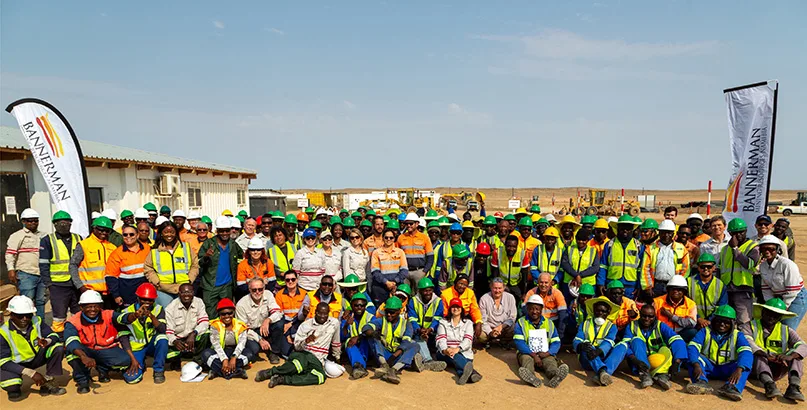
The contractor workforce on site includes over 560 people from four local Namibian firms: Namibbeton, K Neumayer Civil Contractors, Tulela Mining & Construction, and AN Construction.
BMRN’s project team, with over 70 years of collective experience in Africa, focuses on empowering Namibian small to medium-sized enterprises (SMEs).
“Etango will significantly boost Namibia’s uranium mining industry as a key economic driver in the Erongo region. The project’s construction and operations will create numerous job opportunities for its subcontractors, suppliers, and service providers”
Danie van Aswegen, Interim CEO, Bannerman Mining Resources Namibia
STRATEGICALLY LEAPING TO A BRIGHTER FUTURE
The current and primary focus for BMRN’s team is Etango – transitioning from early works into full construction of the mine later this year and finalising the project as a joint venture (JV).
“In February 2026, we announced the strategic partnership with CNNC. Through CNNC Overseas Limited (CNOL), CNOL will invest up to USD$321.5 million for a 45 percent stake in the JV company that owns 95 percent of Etango.
“Bannerman Energy will retain a 55 percent stake in the JV, which translates to a 52.25 percent effective economic interest in the project. The OEF will continue to hold its five percent loan-carried shareholding,” reveals Van Aswegen.
Most importantly, Etango can now be constructed debt-free.
“Building without project debt reduces financial risk, gives us more flexibility, and strengthens our ability to manage construction and ramp-up with confidence, positioning BMRN to remain meaningfully exposed to upside future uranium prices.”
Under the agreement, CNOL will purchase 60 percent of Etango’s production, whilst Bannerman Energy will market the remaining 40 percent, thereby offering revenue certainty and strategic flexibility and supporting stability and growth.
Furthermore, strengthening Namibia’s position as a leading uranium producer, CNOL’s investment in Etango reflects confidence in the country’s regulatory environment. Once operational, the project will boost job creation, skills development, export revenues, and overall economic growth.
“At a time when the world is accelerating nuclear energy development to support energy security and lower-carbon power generation, Namibia is poised to play a critical role in the global nuclear fuel chain.
“For employees, this is a defining milestone. After nearly two decades of technical studies, optimisation, and de-risking work, we have secured the final key piece required to move towards development,” he exclaims.
The company now has construction funding in place, a Tier 1 off-take partner, a globally respected technical collaborator, and a clear pathway to an FID upon completion of the transaction, estimated to be around mid-2026.
“This partnership validates our project strength. With support from Namibian leaders and stakeholders, we are positioning Etango as a key global greenfield uranium project. Our goal is to complete the JV transaction, execute an FID, and commence full-scale construction shortly thereafter.
“We look forward to a successful partnership with CNOL and will continue to build the Bannerman brand and culture as our team grows,” Van Aswegen enthusiastically concludes.
This company profile was produced by the editorial team at Africa Outlook, a publication within the Outlook Publishing global network of B2B industry magazines.
Outlook Publishing showcases organisations and leadership teams shaping sectors including manufacturing, mining, construction, healthcare, supply chains, food production, and sustainability.
Africa Outlook highlights organisations driving growth, innovation, and investment across Africa’s evolving business landscape.