




UNEARTHING ZAMBIAN PROSPERITY
Since prehistoric times, copper – a reddish-brown, highly conductive, and malleable transition metal – has been essential in the development and evolution of humankind.
This fascinatingly diverse resource has played a monumental role throughout history, making monumental contributions from the time of the ancient Egyptians and Romans all the way to modern-day cultures around the world.
Notably, one of the major ages of collective evolution is named after the copper alloy, bronze.
Copper was the foundational metal of the Bronze Age, enabling the transition from stone tools through the development of metallurgy.
Although it has been in use for at least 10,000 years, more than 95 percent of all copper ever mined and smelted has been extracted since 1900.
This unique and remarkable metal, which was first hammered into crude tools by ancient hands, has remained ever-present behind the scenes of humanity’s growth and development, silently orchestrating a miraculous technological symphony for over five millennia.
The limitless and versatile potential of this extraordinary metal has leveraged its use as an essential element of everyday life today, serving as a proven plumbing and construction metal found throughout homes, public transport, office spaces, and even hospitals.
Meanwhile, its role as a crucial component of the renewable energy sector, standing as a vital ingredient for solar technology and wind turbines, continues to grow in importance.
UNIQUE GEOGRAPHY
Situated in the heart of the continent, Zambia is a completely land-linked country in Southern Africa bordered by Angola, Botswana, the Democratic Republic of the Congo (DRC), Malawi, Mozambique, Namibia, Tanzania, and Zimbabwe.
It is a fertile and verdant land, with green hills, tropical forests, and a lovely climate. Diverse and beautiful landscapes captivate visitors at every turn as a large number of tourists from all over the world visit Zambia annually to witness the magnificent beauty of the Victoria Falls, a UNESCO World Heritage Site and one of the world’s largest, most spectacular waterfalls.
Zambia also appeals to those who love their wildlife and exploring truly untouched areas of awe-inspiring natural beauty.
The nation takes its name from the majestic Zambezi River, which rises in the north-west corner of the country and forms its southern boundary.
As such, the incredible rivers of Zambia contribute hugely to the country’s vast biodiversity and complex ecosystems – the Upper Zambezi, running serenely from north to south, has a low gradient, and the area through which it passes is marked by floodplains and swamps.
This great river flows over Victoria Falls and through the Middle Zambezi Valley, much of it occupied by the great man-made, artificial Lake Kariba.
Zambia is one of the continent’s largest countries with a total area of around 752,000 square kilometres (sqkm), which is about the size of France, the Netherlands, Belgium, and Switzerland combined.
For the most part, it consists of a high plateau, with an average height of between 1,060 and 1,363 metres (m) above sea level.
Isolated mountain ridges rise to almost 2,000 m, with peaks such as the Nyika Plateau in Northern Zambia standing even higher.
About 150 million years ago, during the Jurassic era of the dinosaurs, Africa was still part of Gondwana – a supercontinent which included South America, India, Australasia, and Antarctica.
Since then, Zambia’s highlands have been eroded down from an original altitude of over 1,800 m to their current lower levels.
Across most of the country, the surface of the ground tends to be flat, broken by small hills, the result of countless ages of undisturbed erosion of the underlying crystalline rocks.
These rocks contain the bulk of the country’s wealth, found in the form of vast mineral deposits.
In the Northern Province, Zambia is endowed with copper and many critical minerals such as lithium, tin, graphite, nickel, cobalt, manganese, uranium, and other rare earth elements, which are becoming an essential component of the global energy transition.
THE COPPERBELT REGION
The Copperbelt is a natural region in Central Africa which sits on the border between Northern Zambia and Southeast DRC.
This unique natural phenomenon, which is estimated to be more than 500 million years old, forms Zambia’s industrial base, a prosperous area of land around Ndola, Kitwe, and Chingola which has become dotted with mining sites.
As such, the region’s production of copper and cobalt are of vital global importance, with the Copperbelt existing as the second-largest global reserve of copper, about a third of the size of the Chilean reserves in South America.
The Copperbelt region also makes up a portion of the Lufilian Arc, which was formed when two large pieces of continental crust, the Kalahari and Congo cratons, collided.
This collision was one of the many spectacular natural occurrences that happened between 700 and 500 million years ago to form the Gondwana supercontinent.
A seismic collision, this natural phenomenon is thought to have remobilised base metals, already largely present in the sediments that had accumulated in the basin between the two giant cratons.
The brines then concentrated the base metals either along stratigraphic boundaries or along fractures, faults, or within structurally controlled traps.
Today, population density in this region is extremely high, and the environmental impact of so many people is clear to see – as is the intricate relationship between mining, cultural identity, and the local people’s hope for a better future.
Whilst a significant portion of the world simply regards minerals as materials for industrial use, the communities situated within the Copperbelt are natural treasures that represent the region’s history, legacy, and hope for a more prosperous future.
DISCOVERY AND FORTUNE
Early European prospectors were surprised upon discovering the extent of tribal diggings found in the Copperbelt and Congo Pedicle.
Even before the Lunda and Mwata Kazembe Empires of the 1800s and early 1900s, copper has been identified as being in circulation around this time period, mainly in the form of ingots or crosses as well as being used as currency in Central African trade.
It is thought by many experts that Zambia’s rich copper deposits have been exploited since around the 6th or 7th century AD.
There is agreeable evidence that the early Iron Age inhabitants of Zambia mined, smelted, and even traded copper with their neighbours – bracelets and bangles have been discovered at numerous sites across the nation.
Notable European discoveries by prospectors such as William Collier in 1902 had to wait for economic viability before an attempt at a serious mining operation was undertaken.
It was not until the 1920s that a technical breakthrough was realised, resulting in the mining of what was then Northern Rhodesia’s ‘red gold’ becoming highly profitable as a business – from this moment on, the fortunes of Zambia were irrevocably changed for good.
After World War I, demand for copper continued to increase, fuelled by expansion in the global electrical and automotive industries; large-scale mining therefore became a more feasible option.
However, the initial boom in the copper mining industry was then affected by the Great Depression of the 1930s.
Despite this setback, with nations worldwide gearing up for the hostilities that resulted in World War II, another huge rush was created and copper trade surged once more, lasting until the early 1970s.
With an impact that is almost unquantifiable, it was copper that created the social realities that instigated trade unions and the birth of Zambian nationalism.
Additionally, Zambia has historically based political and socioeconomic policies and strategies on the fortunes of copper and is still the biggest producer of the mineral in Africa today.
PRIDE OF THE NATION
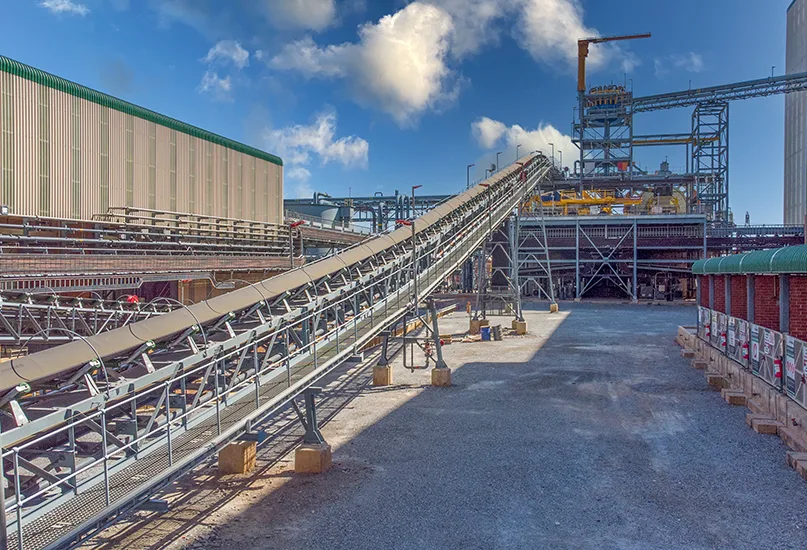
Situated at the vanguard of the nation’s mining sector, Mopani Copper Mines (Mopani) is a proudly Zambian mining company with operations spanning Kitwe and Mufulira in the Copperbelt Province, which are located 60 kilometres (km) apart.
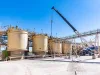
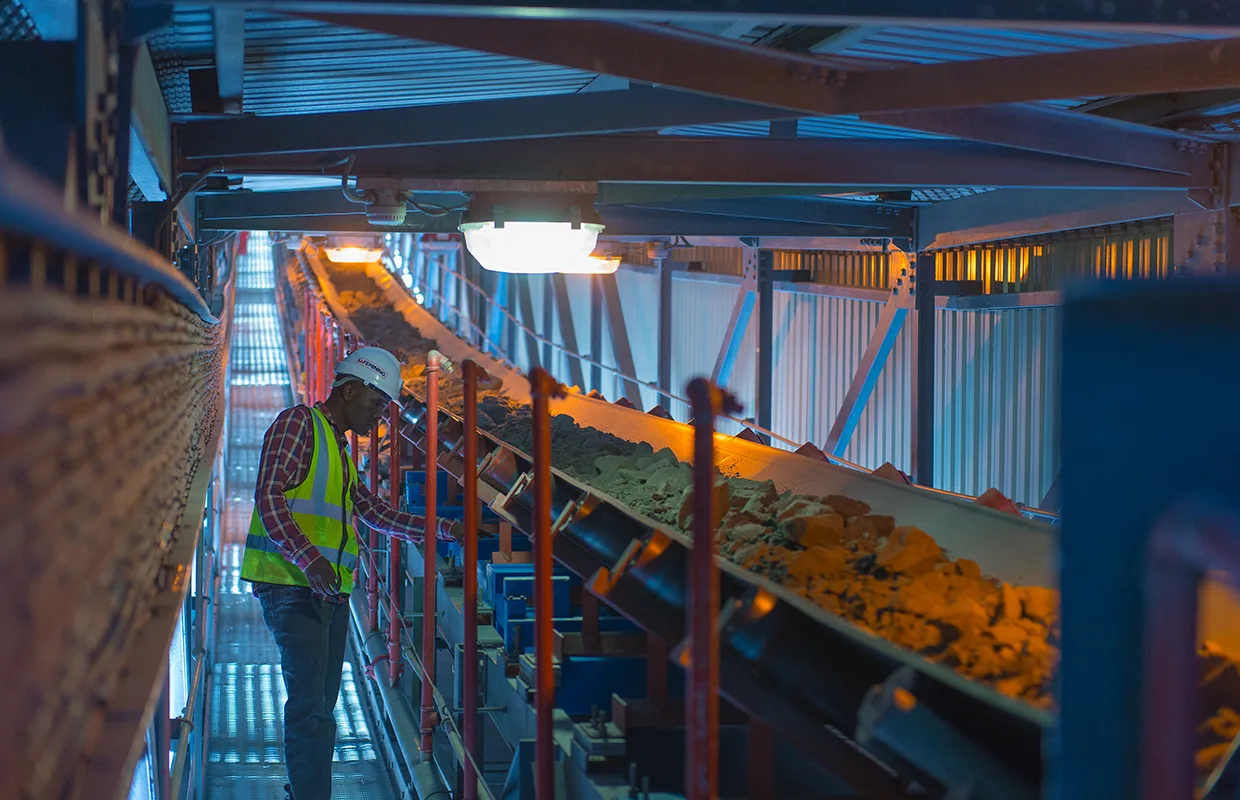
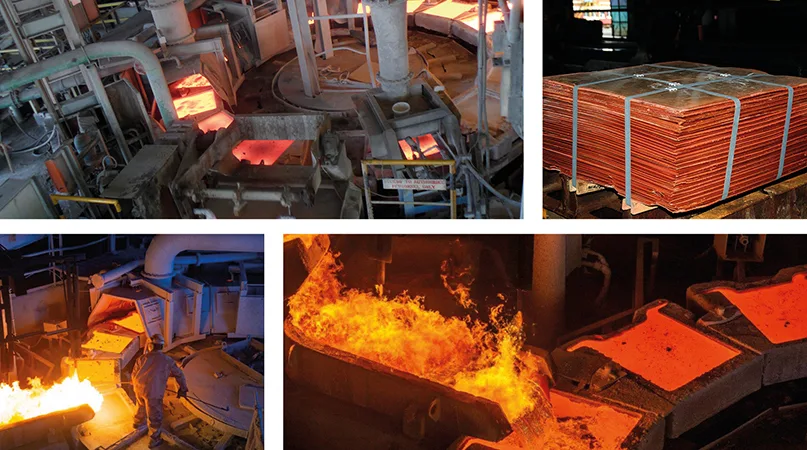
The company’s operations encompass the entire spectrum of the copper production chain – from extracting ore underground to concentrating, smelting, refining, and packaging the finished cathode and making it ready to be exported across the globe.
At present, Mopani is 51 percent owned by Delta Mining Limited, a subsidiary of International Resources Holding (IRH) in the United Arab Emirates (UAE).
The remaining 49 percent of Mopani is owned by ZCCM Investment Holdings Plc (ZCCM-IH), a diversified mining investments and operations holding company based in Zambia.
IRH acquired their portion of the shareholding in 2024 from ZCCM-IH, which had wholly owned Mopani from 2021 after buying off the previous majority stake in the mine from Carlisa Investments – a joint venture (JV) between Swiss commodity trader Glencore and Canadian-based First Quantum Minerals.
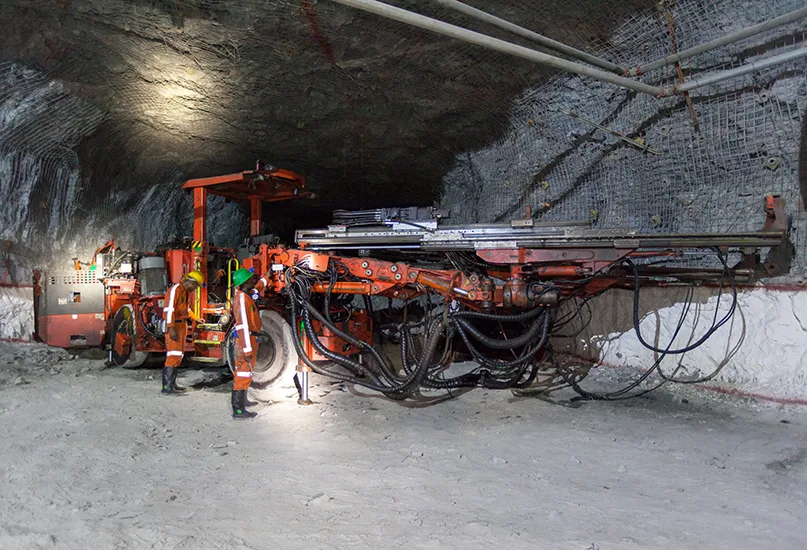
With a rich history in mining and processing dating back to the 1930s, Mopani’s assets in Kitwe and Mufulira include underground mines, concentrators, a smelter, and a refinery.
Determined to keep improving and set the highest possible standards within the African mining landscape, the company has continued upgrading its infrastructure by investing in new technologies to increase production and improve efficiencies across the board.
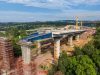
The newest infrastructure includes three deep shafts – Synclinorium, Mindola, and Henderson – which were sunk and equipped between 2014 and 2021 to extend the life of the mine by over 25 years, safeguard existing jobs at both mine sites, and ensure Mopani’s continuous contribution to Zambia’s burgeoning economic development. Mindola is earmarked for completion by 2028.
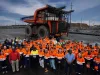
As one of the nation’s largest mining employers, Mopani has become beyond integral to the local economy, providing significant job opportunities and contributing to the region’s prosperity and evolution, as well as offering world-class community outreach and support in the form of education, job prospects, and other transformational opportunities.
AN ACCOMPLISHED CAREER
Proudly leading Mopani forward into a bold and exciting future, Charles Sakanya, CEO, is an accomplished mechanical engineer with more than 40 years of valuable mining engineering experience accrued across Zambia as well as Canada, South Africa (SA), Australia, and Kazakhstan.
As former President of the Engineering Institution of Zambia (EIZ), Sakanya possesses the vast and varied knowledge and experience required to steer the company to greater heights, having worked at Konkola Copper Mines (KCM), Hudson Bay Mining and Smelting Company (HBMSC), and the Nkana, Chibuluma, and Chambishi mines in Zambia.
After completing his primary and secondary education in the country, Sakanya then earnt a Higher National Diploma in mechanical engineering before travelling to the UK where he attended the University of Liverpool, graduating with honours in mechanical engineering and management.
For Sakanya, the determined and dedicated pursuit of a career in mining has been a lifelong interest and passion.
“I have always been interested in mining and was seeking to build a career in the industry from inception,” he recalls fondly.
“From my initial exposure to the vast mining industry, I can truly say that I have had a very illustrious, challenging career, but one that has always remained exciting.”
Indeed, this rich and fascinating career path has taken Sakanya across various continents, with myriad different roles and time spent working in SA and North America, as well as vast exposure to Eastern Europe.
In the Zambian context, he has equipped himself with numerous experiences at the country’s most renowned mining sites, which are dotted throughout the famous Copperbelt Province.
“My comprehensive career in mining has taken me to Kalulushi, Chambishi, Kitwe, Mufulira, Chingola, and Chililabombwe,” he lists.
MOPANI COPPER MINES PARTNERS