




Alastair Bovim, CEO and co-Founder of South Africa-based environmental intelligence company, Insight Terra, reflects on how Africa has a critical opportunity to lead responsible extraction as demand for critical minerals accelerates.
LESSONS LEARNED AND THE ROAD TO SAFER SYSTEMS
With 2025 exposing the fragility of tailings governance and water management across the African continent, 2026 must turn lessons into action.
2025 saw multiple tailings dam failures, including a significant incident in Zambia in February. Meanwhile, the global clean energy transition is accelerating, and with it, the demand for critical minerals.
Global forums like G20, COP30, and Mining2030 have made substantial public declarations of intent, and yet, as 2025 has shown, there are several opportunities to improve the systems responsible for managing the transition and to affect change across the entire value chain.
Companies that purchase, trade, and are involved in sourcing metals and minerals should demand transparency and visibility on how mining and tailings management are done sustainability.
Net zero is a pipe dream if we cannot and do not get the basics of proactively managing water on our mines. We cannot safely grow global mineral supply on a foundation of fragile tailings systems.
Every rechargeable battery, electric vehicle (EV), and wind turbine begins in a mine, and the safety of those mine communities and the surrounding environments must matter as much as the minerals we extract.
Africa, which is home to some of the world’s most important supplies of copper, cobalt, manganese and PGMs, sits at the centre of this minerals surge.
But 2025 highlighted a troubling truth – as governance frameworks like the Global Industry Standard on Tailings Management (GISTM) are maturing, the frequency and severity of tailings failures show that implementation is not keeping pace with the risks.
2025 – A YEAR OF PROGRESS AND PAINFUL REMINDERS
The International Council on Mining and Metals’ (ICMM) 2025 Tailings Progress Report reflected significant progress in governance:
- 67 percent of member facilities have now achieved full compliance with GISTM.
- More than 80 percent of ‘extreme’ and ‘very high’ consequence facilities are compliant, showing that accountability is steadily moving to board level.
But the flip side is a stark one; one-third of facilities remain only partially compliant – a signal of how much work remains before tailings governance becomes truly universal.
67 percent of member facilities that have achieved self-assessed compliance still require an independent audit from the newly established Global Tailings Management Institute (GTMI).
Whilst there is public discourse, this is mostly at a very basic level and lacks true transparency on the operations.
GISTM calls for an integrated knowledge base, performance monitoring, accountabilities, and responsibilities to make the work visible and transparent.
At the same time, 2025 brought multiple failures that underscored the consequences of delayed action in tailings storage facility (TSF) management.
Early last year in Zambia, a breach released acidic, sulphuric-acid-bearing effluent into the Mwambashi and Kafue river systems, with cascading cell failures and overtopping dynamics recorded. Independent analyses confirmed significant water quality impact and long-term heavy metal risks.
In Indonesia’s Morowali Industrial Park, meanwhile, two nickel tailings failures in March 2025 and a fatal landslide later the same month raised questions around site design, rapid industrial expansion, and climate-driven rainfall stressors.
Closer to home in South Africa (SA), a long-awaited investigation into the 2022 Jagersfontein tailings collapse confirmed extensive flooding, pollution, and infrastructure damage.
The report raised concerns about the dam’s design, foundation stability, and oversight, noting that signs of instability may have been present before the breach.
2025 showed us, once again, that tailings failures are not engineering problems alone – they are governance, climate adaptation, and community-protection failures that are largely preventable.
A GOVERNANCE SHIFT – VOLUNTARY STANDARDS TO INDEPENDENT ASSURANCE
One of the most significant structural developments in 2025 was the formal launch of the GTMI which is headquartered in SA and co-Founded by the ICMM, United Nations Environment Programme (UNEP), and Principles for Responsible Investment (PRI).
The GTMI will oversee an independent auditing and certification programme for GISTM – a pivotal step towards transparent, credible assurance for operators, regulators, investors, and, most importantly, mine-affected communities.
Although most major operators are advancing towards compliance, smaller and mid-tier facilities – including many in Africa – remain outside formal global frameworks, which is where the risk lies.
Standards matter, but standards alone don’t change behaviour. Independent assurance, continuous monitoring, and transparent public reporting are what close the governance gap.
Insight Terra contributed to GTMI’s formative work through its involvement with the Minerals Council South Africa, supporting efforts to strengthen tailings governance across the continent.
TECHNOLOGY MOVES CENTRE STAGE – MONITORING MUST BECOME CONTINUOUS
2025 also marked a step-change in the adoption of environmental intelligence tools across the tailings lifecycle.
Insight Terra successfully received funding from major climate technology investors and has expanded deployments across Africa and South America.
It has also deepened its partnerships with engineers of record, instrumentation vendors, and systems integrators, and achieved Amazon Web Services (AWS) energy sector differentiated partner status.
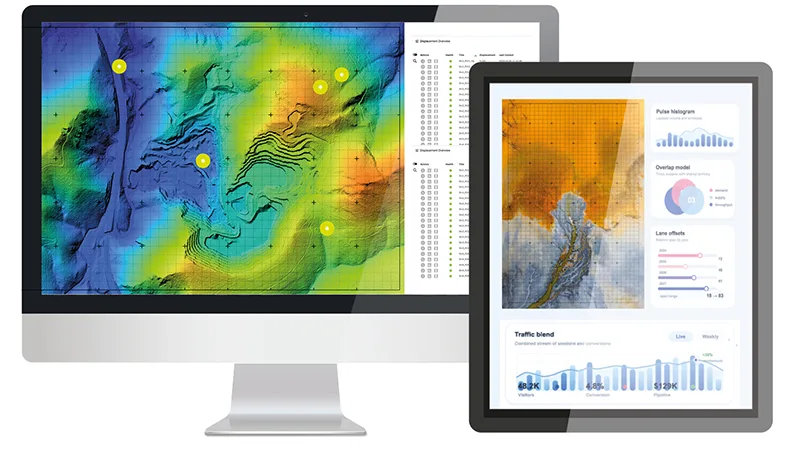
Platforms that fuse internet of things (IoT) sensors, ground-based instruments, satellite observations, interferometric synthetic aperture radar (InSAR) analytics, and machine learning (ML)-based triggers are increasingly essential for real-time visibility.
Synspective’s expanding StriX synthetic aperture radar (SAR) constellation – now supporting Global South demonstration projects alongside Insight Terra and industrial automation and control systems provider, Yokogawa – is enabling millimetre-level displacement tracking for large areas around TSFs and pit walls.
Tailings facilities are dynamic, living systems, so monitoring cannot be static.
Integrated sensing and real-time analytics give operators the ability to detect anomalies early and intervene before small deviations become structural failures.
Insight Terra’s platform continues to emphasise GISTM Principle 7 – the requirement for disciplined, auditable data governance and clear accountability workflows.
2026 – FROM REACTION TO PREDICT-AND-PREVENT
In the coming year, it’s imperative that we convert 2025’s lessons into meaningful system and behavioural change. Two major forums will set the agenda early:
- Mining Indaba 2026, which will be hosted in Cape Town, SA, between the 9th and 12th February, is placing partnerships, technology, and cross-value-chain collaboration at the centre of its programme.
- Southern African Institute of Mining and Metallurgy (SAIMM) Tailings 2026, which will be hosted in Johannesburg, SA, between the 3rd and 4th March, will advance discussions on South African National Standards (SANS) 10286 updates, artificial intelligence (AI)-enabled monitoring, GTMI implementation, and detailed failure learnings.
The goals for 2026 are clear:
- Close the partial-conformance and self-assessment gap across the industry.
- Scale integrated SAR and IoT monitoring stacks.
- Treat water as a strategic resource requiring continuous surveillance.
- Publish transparent, community-facing dashboards, and emergency protocols.
- Embed independent assurance into routine practice.
Most importantly, we need to continue to foster collaboration and teamwork with the accountable executive who reports to the board, the responsible tailings facility engineer that works at site level, and the engineer of record that looks to monitor performance against the design.
The Insight Terra platform allows these critical stakeholders to gather around the data and continually improve the safety and transparency of operations.
If mineral demand is rising exponentially, our safety and transparency standards must rise to match it – anything less leaves communities and the transition exposed.
A MOMENT FOR AFRICAN LEADERSHIP
With Africa at the heart of global critical mineral supply chain, the continent must be part of the conversation on responsible extraction.
African nations can lead by showing that environmental intelligence, transparent governance, and community protection are not burdens – they are strategic advantages.
As such, zero harm must be the expectation, not the aspiration.
This article was contributed by a guest author and published by the editorial team at Africa Outlook, part of the Outlook Publishing global network of B2B industry magazines.
Outlook Publishing features leadership insights, industry perspectives, and company stories from organisations shaping sectors including manufacturing, mining, construction, healthcare, supply chains, food production, and sustainability.
Africa Outlook highlights the organisations, leadership teams, and projects shaping Africa’s dynamic business and industrial landscape.