




Bokomo Namibia has established itself as a significant contributor to the country’s food and beverage market by manufacturing and distributing essential goods and bolstering local economies. CEO, Hubertus Hamm, discusses meeting consumer needs whilst supporting local agriculture and communities.
NOURISHING A NATION
Bokomo Namibia (Bokomo) is a prominent food and beverage manufacturing and distribution company based in Windhoek, Namibia’s bustling capital.
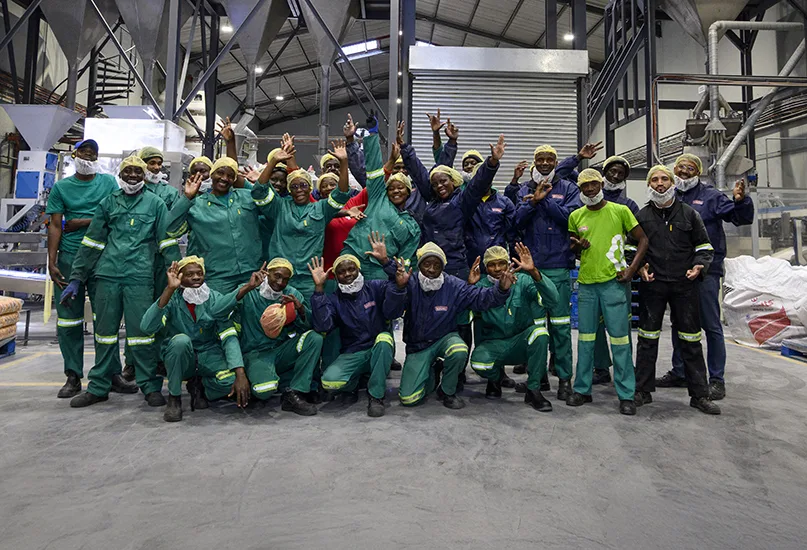
Established in 1998, Bokomo is now an equal joint venture (JV) between Frans Indongo Group and PepsiCo. With a workforce of 624 employees, it is pivotal in supplying staple foods and fast-moving consumer goods (FMCG) to the Namibian market.
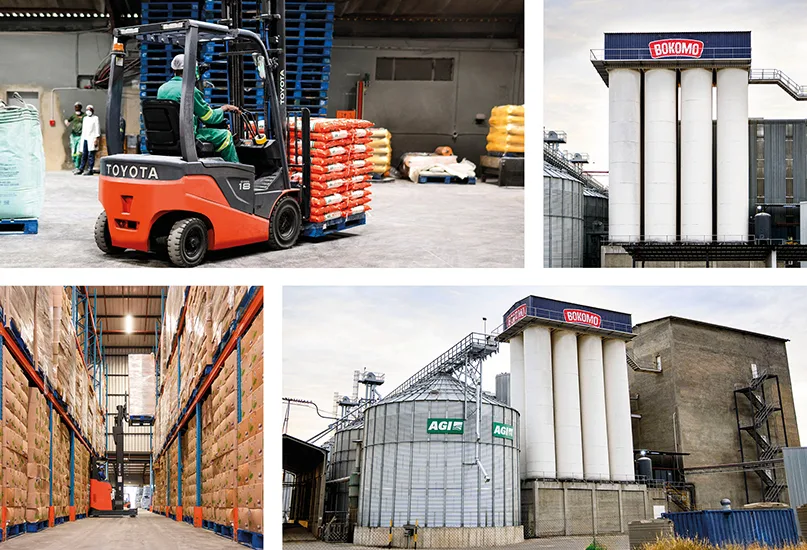
Operating primarily from its Brakwater and Walvis Bay industrial sites, Bokomo’s main facilities include grain storage, wheat and maize mills, sugar and rice packing plants, and warehousing and distribution infrastructure.
“Our Walvis Bay site offers additional storage and logistics capabilities, enabling more efficient import and distribution of both raw materials and finished goods. We also have a diverse portfolio of staple foods, essential items, beverages, and groceries,” introduces Hubertus Hamm, CEO.
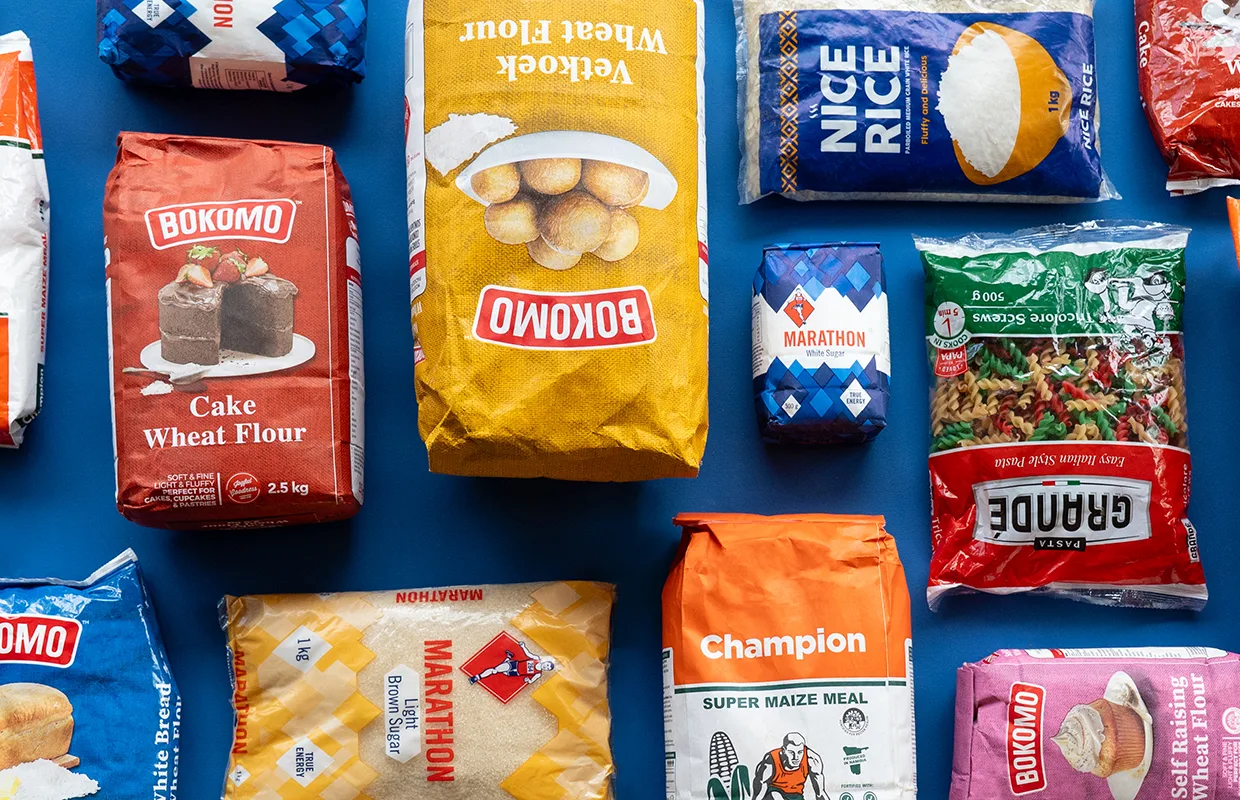
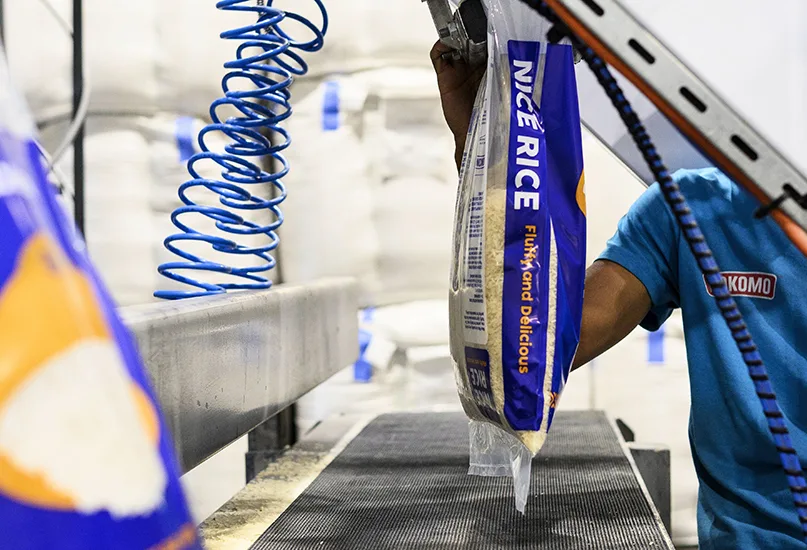
Popular flour and cereal products under the Bokomo brand include Champion maize meal, Bokomo wheat flour, Weet-Bix, and Corn Flakes, alongside Marathon Sugar, Spekko Rice, Nice Rice, Pasta Grande, and White Star instant maize porridge.
In addition, Bokomo provides fruit juices under the Fruitree and Liqui-Fruit brands, Lipton Ice Tea, Moirs baking products, Safari dried fruit and nuts, as well as snacks such as Simba, Lay’s, Doritos, NikNaks, Cheetos, and Fritos, serving a wide range of customers, including the retail sector – supermarkets, wholesalers, informal traders, industrial clients, bakeries, and food producers, and everyday consumers across Namibia.
Playing a vital role in Namibia’s food manufacturing sector, Bokomo distributes products nationwide, contributing to food security, creating numerous jobs, and supporting local supply chains – blending local ownership with global expertise.
EVOLVING INTO A PRODUCTION POWERHOUSE
From its humble beginnings as an egg farm, Bokomo has since grown into a major national food supplier.
Initially focusing on egg production, the company transitioned to grain milling – specifically wheat and maize – in the early 2000s and began distributing products through Pioneer Foods.
In 2007, local ownership was strengthened when Frans Indongo Group acquired a 50 percent stake. By 2008, the company expanded into broader FMCG distribution, investing in new milling plants and warehousing and distribution capacity throughout the 2010s.
Bokomo acquired Marathon Sugar’s sugar packing and distribution business in 2020, solidifying its position as a leading national food manufacturer and distributor.
The JV allows Bokomo to benefit from global expertise and best practices whilst still preserving its strong local heritage.
“Through PepsiCo, the company gains access to advanced technology, international standards, and large-scale operational knowledge,” Hamm highlights.
“At the same time, Frans Indongo Group ensures we remain aligned with local market conditions, culture, and consumer needs. Consequently, the JV’s structure is particularly effective because it provides flexibility.”
Moreover, Bokomo can draw on its shareholders’ expertise, skills, and economies of scale when it is advantageous to do so. However, it also retains the independence to make local decisions when more beneficial or cost-effective.
As a result, the company is more agile and responsive to market changes compared to fully centralised multinational operations. It can avoid unnecessary bureaucracy and compliance burdens when they do not add value, whilst still maintaining high standards where required.
This balance enables Bokomo to operate efficiently, competitively, and sustainably in the Namibian market.
STRATEGISING THE SNACK SECTOR
Bokomo maintains approximately 70 percent market share in Namibia’s snack food market, employing various strategies to sustain its competitive edge.
“There are several factors behind our dominance in the industry, including a strong position in the snack market largely driven by our association with powerful, globally recognised brands,” Hamm points out.
The company’s strong portfolio has high consumer recognition and trust, benefitting from global marketing and brand equity through PepsiCo.
“Consumers associate us with product consistency, superior quality, our use of international production standards and quality control systems, consistent taste, packaging, and product reliability,” he informs.
“Brand loyalty and repeat purchases are built through continuous innovation and the regular introduction of new flavours and limited editions, which keep products exciting and relevant, maintain consumer interest, and prevent market stagnation – particularly amongst younger consumers.”
With a strong distribution network across Namibia, Bokomo can ensure its products are widely available in supermarkets, wholesalers, and informal retail outlets, with high stock availability ensuring customers can always find the product, reinforcing its market share.
“Our strategies to maintain a competitive edge include leveraging global and local strengths whilst providing access to PepsiCo’s innovation pipeline, supply chain expertise, and marketing capabilities, combined with local market knowledge for better execution,” emphasises Hamm.
Having portfolio synergy and distribution efficiency is a key internal advantage that enhances Bokomo’s ability to offer a diverse product range.
Snacks and cereals are part of Bokomo’s broader product mix as they are lightweight, high-value staple foods. This is in contrast to flour, maize meal, and sugar, which are heavy and have a lower unit value.
These factors create an optimal distribution mix – trucks can carry both bulk staples and high-margin snacks and cereals, improving cost efficiency per delivery and maximising the profitability of the logistics network.
“Economies of scale result from large volumes, enabling lower production and procurement costs, as well as competitive pricing without sacrificing margins.”
Market responsiveness and agility mean Bokomo can quickly introduce new products, adapt to consumer trends, and be less rigid than fully centralised multinationals.
Moreover, strong retail relationships, reliable service, and consistent supply build trust with retailers and preferred shelf space and visibility.
“We uphold high product quality through continuous innovation, excellent distribution, and a strategic product mix, enhancing logistics efficiency.
“Our competitive edge lies in integrating global brand strength with local operational efficiency, especially through smart distribution and portfolio management,” states Hamm.

ADAPTING TO CHANGING DYNAMICS
Bokomo has closely monitored recent trends in the Namibian food and beverage industry and is actively adapting to these changes.
The growth of value and private-label store brands, for example, has become noticeable as consumers become more price-sensitive.
Despite this, strong brand loyalty persists amongst Namibian consumers who remain highly loyal to established brands.
“Switching to new brands takes time and trust. Market share shifts occur gradually over the years rather than rapidly,” cautions Hamm.
Furthermore, retailers wield significant power over shelf space, promoting house brands, and shaping purchasing decisions.
“We are adapting in this context by leveraging strong brands and continuing to invest in well-known own brands and ones supported by PepsiCo, as well as focusing on quality, consistency, and brand trust to retain loyal consumers.
“A long-term market approach that recognises success in Namibia requires patience and sustained investment, building brands over the long-term rather than chasing short-term gains,” he strategises.
Strengthening trade relationships involves working closely with retailers to secure shelf space, run promotions and in-store activations, and ensure strong product visibility. Essentially, these partnerships are crucial given retailers’ market power.
“We adapt to price sensitivity by offering competitive rates across key products, ensuring value without compromising quality, maintaining high service levels, focusing on consistent availability and distribution excellence, and ensuring products are always in stock, reinforcing both brand loyalty and retailer trust,” Hamm assures.
Namibia’s food industry is seeing a shift towards value and retailer influence, but brand loyalty remains strong.
As such, Bokomo responds by investing in trusted brands, taking a long-term market view, building strong relationships with retailers, and maintaining availability, value, and service levels.
Ultimately, this approach helps the company stay competitive in a market where trust and consistency matter more than short-term trends.
“We approach product innovation through a combination of consumer-centric design, rigorous research, and cost-conscious engineering”
Hubertus Hamm, CEO, Bokomo Namibia
CUSTOMER-CENTRIC INNOVATION AND INVESTMENTS
Bokomo continues to make strategic investments to expand capacity, improve efficiency, and strengthen its brands, including a 2025 wheat mill upgrade and modernised equipment to enhance production quality.
In 2024, meanwhile, a local rice packaging plant was set up in just over 100 days to boost local production and reduce reliance on imports.
Continuous automation and capacity investments include ongoing improvements to production processes to increase output and operational performance.
Additionally, a new warehouse investment will commence in May 2026, expanding storage capacity by 20 percent and supporting growing product volumes and distribution capabilities.
“Brand and on-shelf investments mean continuous upgrades to packaging and in-store execution to maintain consumer appeal and visibility,” Hamm explains.
Bokomo takes a customer-centric approach to product innovation by actively integrating consumer feedback into development, ensuring every change or new offering creates real value.
The products are constantly re-engineered and improved to enhance quality, taste, and affordability. Cost efficiency plays a crucial role in innovation, ensuring products remain accessible whilst still providing value.
“In a market without formal consumer research platforms or comprehensive market-share data, we have developed our own models, which track price sensitivity and elasticity, shopper behaviour, channel performance across different retail environments, and extensive research.
“Both qualitative and quantitative research are used to guide decisions on product improvements, development, and innovation initiatives. Research ensures these changes are aligned with real consumer needs and preferences, reducing the risk of failed launches,” clarifies Hamm.
A strategic approach to innovation is never conducted in isolation; it is evidence-based and informed by consumer insights, with a focus on balancing consumer value, operational feasibility, and cost-effectiveness.
“We approach product innovation through a combination of consumer-centric design, rigorous research, and cost-conscious engineering,” asserts Hamm.
By building its own market intelligence systems, the company ensures every new product or improvement is grounded in real market dynamics.
This also involves promoting sustainability without compromising on quality or affordability, combining consumer-driven packaging choices with innovative energy and water solutions.
“We follow a clear philosophy: ‘what we do well, we do ourselves; what our partners can do better, we do with them’. This approach fosters growth and collaboration with small and local enterprises”
Hubertus Hamm, CEO, Bokomo Namibia
CHAMPIONING LOCAL DEVELOPMENT
Bokomo contributes to the local economy, and it supports the broader Namibian economy in several ways beyond revenue generation.
As a major wheat and maize miller, the company sources significant portions of its product from local harvests, directly supporting farmers and the agricultural sector.
“Company leadership actively participates in relevant industry forums, helping shape policies and promote sector growth,” determines Hamm.
“We follow a clear philosophy: ‘what we do well, we do ourselves; what our partners can do better, we do with them’. This approach fosters growth and collaboration with small and local enterprises.”
Through initiatives under its Champion maize meal brand, Bokomo invests in soccer academies and leagues, providing both funding and economic activity whilst supporting youth development and community engagement.
“By supporting local agriculture, fostering partnerships, participating in industry development, and investing in community programmes, we play a broader role in Namibia’s economic and social development beyond its core business operations,” concludes Hamm optimistically.
Whilst Bokomo is committed to social responsibility, it is also keenly aware of the need to adapt and grow in today’s evolving market, which equally reflects its dedication to Namibian communities.
In the coming year, Bokomo is concentrating on strategic growth, efficiency, and thoughtful innovation. The company plans to expand its capacity by investing in production and warehouse capabilities to meet increasing demand.
To reduce costs and enhance productivity, the company will utilise technology to streamline its operations.
Additionally, it is exploring new product categories that complement its existing portfolio, avoiding unnecessary complexity whilst maintaining a focus on core strengths.
This approach reinforces Bokomo’s competitive edge and ensures that the needs of Namibian consumers are effectively met.
BOKOMO NAMIBIA PARTNER

This company profile was produced by the editorial team at Africa Outlook, a publication within the Outlook Publishing global network of B2B industry magazines.
Outlook Publishing showcases organisations and leadership teams shaping sectors including manufacturing, mining, construction, healthcare, supply chains, food production, and sustainability.
Africa Outlook highlights organisations driving growth, innovation, and investment across Africa’s evolving business landscape.