





As Africa’s mining landscape continues to evolve, AngloGold Ashanti maintains a strong operational footprint across the continent, bolstered by strategic partnerships, social investment, and a robust double materiality framework underpinning its long-term strategy.
EMPOWERING PEOPLE, ADVANCING SOCIETIES
In recent years, Africa’s mining sector has entered what could be described as a new era of growth and strategic relevance.
The industry has seen a significant shift away from extracting traditional commodities and towards extracting critical minerals that underpin the global energy transition.
Copper, lithium, cobalt, and rare earth elements have moved to the forefront, placing Africa at the centre of global supply chains for batteries, electric vehicles (EVs), and renewable energy infrastructure.
This has elevated the continent’s geopolitical importance, with major global powers competing to secure access to strategic mineral resources.
Alongside this shift in demand, governments in countries such as Namibia and Zimbabwe have introduced restrictions on the export of unprocessed minerals, forcing a move towards local beneficiation and downstream processing.
Whilst these measures have increased complexity for operators, they have also created opportunities for industrial development, skills transfer, and job creation.
As Africa’s mining sector undergoes a transformative period, few companies are as closely intertwined with the continent’s socioeconomic and industrial trajectory as AngloGold Ashanti.
Operating across some of Africa’s most mineral-rich regions, the company balances large-scale gold production whilst maintaining its purpose to empower people and advance societies.

AN ESSENTIAL CORNERSTONE
Africa remains the cornerstone of AngloGold Ashanti’s global portfolio, with the company’s operations in the continent accounting for approximately 60 percent of overall production.
In Ghana, it operates the Obuasi mine, a flagship underground operation in the Ashanti region with a mine life exceeding 20 years.
Following a comprehensive redevelopment in 2019, the Obuasi mine is ramping up towards annual production of between 400,000 and 450,000 ounces (oz) between 2024 and 2028.
AngloGold Ashanti also operates the Iduapriem mine in Western Ghana, an open-pit operation encompassing the Iduapriem, Teberebie, and Ajopa concessions, utilising carbon-in-leach and gravity circuits for processing.
Elsewhere, Tanzania is home to the Geita mine – one of the company’s most significant assets, located in the country’s northwest.
Geita has transitioned into a predominantly underground operation whilst retaining some open-pit mining, focusing on local procurement and supporting local employment drives.
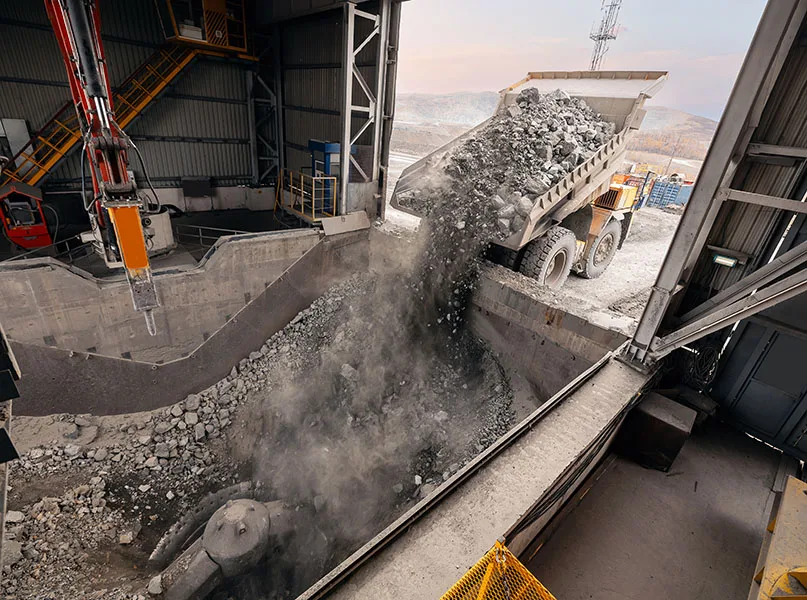
Over in the Democratic Republic of the Congo (DRC), AngloGold Ashanti also holds a 45 percent stake in the Kibali mine – one of Africa’s largest gold operations – which is managed by Barrick Gold Corporation.
Further west, the Siguiri mine in Guinea is an 85 percent-owned, large-scale open-pit operation comprising multiple pits across a vast mineralised zone.
The company’s African footprint expanded further in November 2024 with the acquisition of Centamin, a strategic move which added the Sukari mine into its portfolio – a low-cost, large-scale open-pit and underground operation in Egypt.
The company intends to boost annual production at the already high-performing Sukari asset to approximately 500,000 oz, utilising advanced technology and optimising operations for long-term, high-margin growth.
Beyond its producing assets, AngloGold Ashanti maintains a strong pipeline of exploration and development projects across Guinea, Tanzania, Egypt, and Côte d’Ivoire.

ROBUST FRAMEWORK
In 2024, AngloGold Ashanti formally introduced a double materiality framework as the basis of its sustainability reporting strategy.
The framework was designed to provide a comprehensive, forward-looking view of both financial and non-financial risks and opportunities.
By integrating environmental, social, and governance (ESG) considerations into its enterprise risk management processes, the company ensures sustainability is embedded at the core of each strategic decision it makes.
The framework assesses outside-in impacts – for example, how external sustainability issues such as climate change, regulation, or community relations affect financial performance – alongside inside-out impacts, which consider how the company’s operations influence society and the environment.
Each year, AngloGold Ashanti identifies and reviews a set of material sustainability issues ranging from tailings management and water stewardship to human rights and climate resilience.
This process is informed by structured engagement with both internal and external stakeholders – particularly host communities most affected by mining activities.
The resulting insights act as a guide for board-level oversight, capital allocation, and operational priorities, whilst also shaping integrated reporting across its annual and sustainability reporting.
Overseen by the company’s Social, Ethics, and Sustainability (SES) Committee, the double materiality framework remains responsive to evolving expectations and operating contexts.
RESPONSIBLE, SUSTAINABLE LEGACY
For AngloGold Ashanti, a deep-rooted sense of environmental stewardship remains central to its operations.
The company recognises that responsible mining depends on protecting natural resources, reducing emissions, and managing environmental risks as transparently as possible.
This commitment is reflected by its investments in renewable energy, water recycling, and biodiversity management across its African operations.
Several sites now incorporate dedicated solar or grid-connected renewable power solutions, thereby reducing reliance on diesel and supporting the company’s decarbonisation goals.
Water stewardship is another priority, particularly in arid regions such as Namibia and South Africa’s Northern Cape, where scarcity requires innovative solutions including desalination and closed-loop recycling systems.
Corporate social responsibility (CSR) at AngloGold Ashanti focuses on creating shared value and ensuring mining activities contribute meaningfully to host communities – both during operations and long after mine closure.
This philosophy is reflected in the company’s long-term socioeconomic development plans, such as the 10-year programmes implemented at key sites like Obuasi.
These initiatives focus on local procurement, skills development, agriculture, and enterprise development, helping to diversify local economies and reduce dependence on mining alone.
By aligning production growth with decarbonisation, safety, and community investment, AngloGold Ashanti aims to leave a legacy of not only mining excellence but also strengthened communities and environmental stewardship.