




THE ROAD TO MOPANI
Following this, Glencore completed the overall purchase of shareholding of Mopani in 2000, a move which sent Sakanya to Canada the following year, where he worked at HBMSC in Northeast Manitoba for almost two years.
Several years later, in 2004, after a period working as the Appointed Engineering Manager for KCM at SmelterCo in Kitwe, Sakanya was initially headhunted to join the Mopani team by former CEO, Tim Henderson.
He accepted the role and subsequently joined the business, holding the position of Chief Engineer prior to his eventual appointment as Mopani’s new CEO, leading the business ever since.
“In April 2020, when Glencore announced they were placing Mopani under care and maintenance (C&M), I was appointed as Acting CEO and then confirmed in my new role in early May 2021,” he recalls.
C&M refers to the process of keeping assets such as machinery, mines, and buildings in good working order whilst they are temporarily out of use. It ensures facilities remain safe and functional, allowing for a quick restart when operations eventually resume. The Zambian government, through ZCCM-IH, negotiated with Glencore and acquired 100 percent shareholding of Mopani.
Utilising an intimate and thorough understanding of the industry and leveraging his in-depth experience of the mine’s operations has led Sakanya strategically to his position today, taking the helm at Mopani to guide its re-emergence from intended C&M back to the forefront of the global market.
Through his effective, tried, and tested management strategies, Mopani will undoubtedly not only survive but continue to thrive under his guidance.

“From my initial exposure to the vast mining industry, I can truly say that I have had a very illustrious, challenging career, but one that has always remained exciting”
Charles Sakanya, CEO, Mopani Copper Mines
ZAMBIA NATIONAL MINING TARGETS
His Excellence, Hakainde Hichilema, President of Zambia, has set an ambitious target for the nation to increase its annual copper production to three million tonnes (t) by 2031.
This will be supported by USD$12 billion in overall sector investments, aiming to drive economic growth and job creation.
The key elements of this nationwide strategy include reviving dormant mines, expanding infrastructure, and enhancing investor confidence through stable policies.
“Regarding these ambitious targets, production is increasing in an overall sense, and Zambia is looking to cross the phycological one million cathode production mark in 2026,” notes Sakanya.
As an investor policy moving forward, Zambia’s presidency has rejected all proposals for a mandatory 15-40 percent free-carried state interest in mines in order to maintain an investor-friendly and stable environment for growth.
Similarly, Hichilema continues to emphasise that whilst enabling mining expansion, operations must not cause environmental degradation or water pollution.
Meanwhile, other key initiatives that have been highlighted for Zambia’s national growth include aerial geological mapping to unlock new mineral potential.
A NEW ERA OF GROWTH
In 2024, when IRH acquired a 51 percent stake in Mopani, it set out to establish a new and unique partnership structure for the global mining sector – a feat which it has since achieved.
“IRH’s investment is being used to revitalise and modernise Mopani’s assets and put our company firmly on a path of new growth in line with national targets” Sakanya tells us.
The ultimate objective for both Mopani and IRH is to achieve a production rate of 200,000 t of copper cathodes within the next three to four years.
Additionally, new investment efforts and plans for expansion form part of the broader Zambian government initiative to increase national copper production to 3 million t per annum (tpa) by 2031.
Alongside this, the transformational power and immense potential of new technology is positioned at the heart of IRH’s turnaround strategy for Mopani.
“The introduction and implementation of Internet of Things (IoT) devices, artificial intelligence (AI), and an improved telecommunication network will facilitate improved productivity, efficiencies, and safety across Mopani’s entire operational footprint.
“We’re employing AI in the mining industry to help us improve productivity and ensure safety. Mining is carried out in very difficult underground conditions, so we are utilising technology to help create safer operational environments,” he observes.
Moreover, improved analytics and accuracy of data collection enabled through this advanced technology will undoubtedly lead to more informed decision-making and optimised operations.
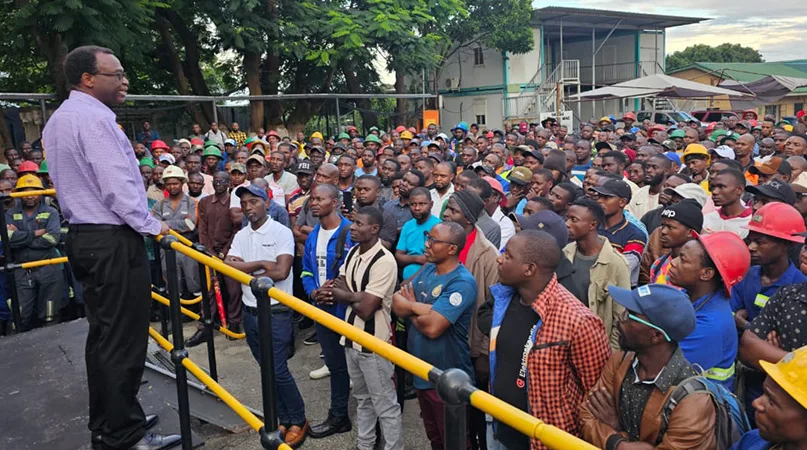
“The ongoing modernisation of Mopani will be completed in such a way that ensures job security for the many thousands of full-time employees whilst creating enhanced value benefitting all local stakeholders,” Sakanya excites.
One particularly crucial and exciting element of IRH’s investment is a USD$400 million injection to complete three new deep shafts – Synclinorium, Mindola, and Henderson – replacing the older infrastructure at both the Nkana and Mufulira mines, which date back to the 1930s.
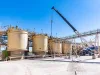
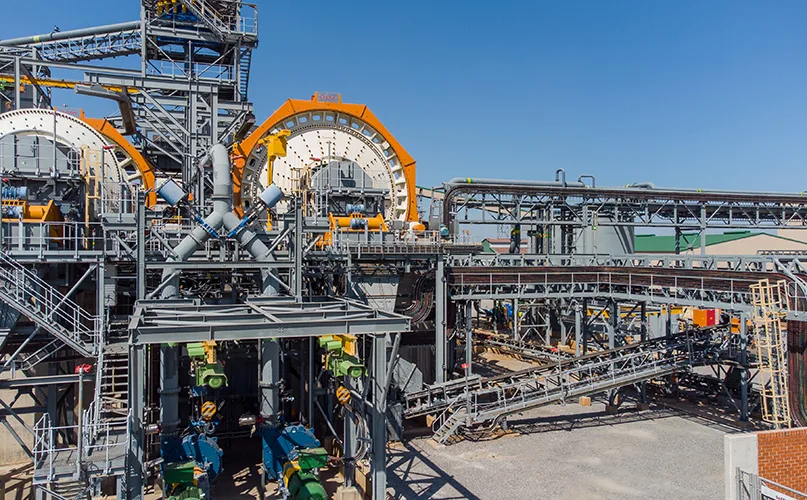
In addition to this, Mopani has also built a brand-new concentrator at the Nkana mine site.
“The addition of impressive new infrastructure is expected to extend the life of the mine by over 25 years, improve production efficiencies, and safeguard existing jobs whilst guaranteeing Mopani’s continued contribution to growing the Zambian economy,” Sakanya explains to us.
“We are working tirelessly to complete all our current slate of expansion projects. The target is that by mid-2029, we will have reached completion, allowing us to then embark on the next steps of our expansion journey.”
AI TO BOOST COPPER DEMAND
Simultaneous to the integration of AI into Mopani’s own mining operations, notable growth in the AI and defence sectors will boost global copper demand by 50 percent by 2040.
AI is a major growth area for copper, with more than 100 new global data centre projects unveiled last year, valued at just under USD$61 billion.
“Copper has long been used widely across the construction, transportation, technology, and electronics industries as it is one of the best conducting, corrosion-resistant, and malleable metals,” Sakanya explains.
Meanwhile, as the electric vehicle (EV) industry has lifted copper demand over the past decade, areas of industry such as defence and robotics will require even more of the metal during the next 14 years.
This is alongside the more traditional consumer appetite for air conditioners and other copper-hungry appliances.
“Now that we understand global copper demand will reach 42 million tpa by the 2040 mark, up from 28 million in 2025, nearly a quarter of that demand is likely to be unmet without new sources of supply,” he warns.
The underlying demand factor at play is the electrification of the world, and copper is the metal that fuels it.
Nearly every electronic device contains copper, and whilst Chile and Peru are the largest copper miners, and China is the largest copper smelter, the US – which has imposed a tariff on some types of copper – imports half of its needs each year, meaning producers such as Zambia now have the opportunity to capitalise on the sustained upswing in worldwide demand.
EXPANSION PROJECTS AND TARGETS
The future of Mopani lies in the expansion projects that the company has been undertaking since 2013 with a view to extending the lifespan of the mine by over 25 years.
“As a proudly Zambian mining company, our desire is to continue investing in infrastructure development to ensure we make Mopani a world-class mining operation,” Sakanya emphasises firmly.
IRH and Mopani are partnering to oversee a major USD$1.9 billion expansion, driven by the new USD$400 million investment that will fund this exciting next chapter.
The overarching goal is to boost cathode production from 226,000 tpa to 300,000 tpa by 2031, with a long-term target to achieve over 500,000 tpa within a decade.
Key initiatives that have been highlighted for this upcoming slate of expansion include replacing old infrastructure with new, environmentally efficient technology, such as a new primary furnace, smelting furnace upgrades, a matte settling furnace, an oxygen plant, and a sulphuric acid plant, which will significantly increase production.
The impact of these new additions and upgrades is significant as they are expected to extend the mine’s lifespan by over a quarter of a century, securing the immediate future of Mopani at the forefront of the global mining industry.