




From point of origin to consumption, Nucleus Mining Logistics is on a mission to transform African mine supply chains by providing precise, end-to-end cargo solutions. Claire Clark, CCO, reflects on the group’s ability to provide stability and its continued focus on controlled growth.
CARGO AT THE CORE
Having transformed dramatically in recent years, Southern Africa’s logistics environment has shifted from a state of critical, fragmented infrastructure towards a more integrated, digitalised ecosystem designed to boost regional trade.
“When I first entered the industry, logistics was largely transactional – moving cargo from A to B – whereas today it is strategic and integrated,” introduces Claire Clark, CCO of Nucleus Mining Logistics (NML).
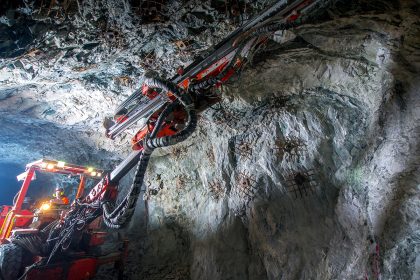
A mine is often seen as a single operation, but in reality, it functions like a complex machine made up of many interconnected parts.
“If one component stops, everything stops – and the supply chain is one of the most critical components,” Clark adds.
Today, mining companies require partners who understand regulatory frameworks, border dynamics, infrastructure constraints, and risk management across multiple countries.
“The supply chain has become just as critical as the mine itself; if you cannot move equipment, reagents, or products reliably, production stops,” she outlines.
The industry has also seen a shift from siloed service providers to full-solution logistics partners, with clients placing greater emphasis on visibility, accountability, and predictably.
As such, logistics is no longer just support function – it’s a production enabler.
LOGISTICS LIFECYCLE
As a specialised mining supply chain group, NML supports complex African trade corridors, linking international suppliers to inland mining operations and onward to global markets.
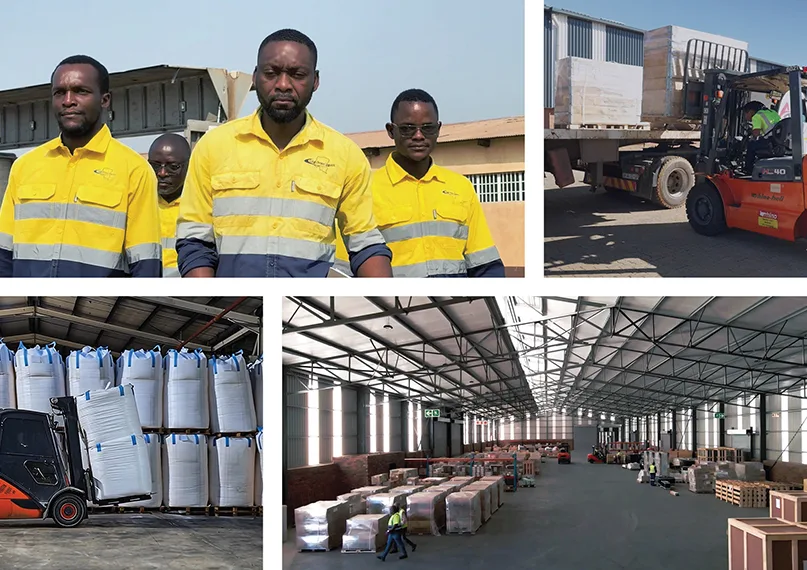
NML’s involvement in the supply chain begins at the order placement stage, assisting with supplier expedition, consolidation, and coordination of project cargo and mining reagents across sea, road, air, and multimodal transport.
Cargo moves through NML’s regional network into the mine’s central warehouse for distribution across site operations, and the cycle continues outbound, turning trucks around with exportable metals such as copper, zinc, cobalt, and tin, to name just a few.
The group also manages escorts where required, coordinating port offloading and distributing products internationally.
“In simple terms, we support the entire logistics lifecycle from supplier to mine to the world,” Clark surmises.
NML employs over 100 people, with teams positioned strategically along the corridors it serves.
“Our client base includes mining houses, construction and engineering contractors, engineering, procurement, and construction management (EPCM) firms, equipment manufacturers, project developers, industrial suppliers, and international trading companies operating within the resources sector,” she outlines.
To achieve this, the group operates through a structured regional network comprising several resources which, together, create an integrated corridor solution.
“We’re not simply moving cargo across borders – we’re building stable supply chains across the region,” Clark prides.
In addition, NML is a member of the CrossTrades Network, enabling global access to trusted logistics partners in key origin countries and seamless coordination of international supplier movements into African corridors.
“Our business supports both long-term operational mine supply chains and large-scale project cargo movements, with structured teams across commercial, operational, compliance, and border management functions,” she details.
“We’re not simply moving cargo across borders – we’re building stable supply chains across the region”
Claire Clark, CCO, Nucleus Mining Logistics
TRUSTED ECOSYSTEMS
With a strong customer-focused model, collaborative and strategic partnerships enable NML to solve the challenges facing today’s supply chain.
“Africa cannot be serviced through a single company alone – success here is built on trusted ecosystems,” Clark emphasises.
As such, the group partners with transporters, clearing agents, regulators, local operators, and clients themselves.
“By integrating these relationships rather than competing against them, we remove friction points in the supply chain,” she insights.
According to Clark, mining operations are like large machines – highly sophisticated, but dependent on many smaller moving parts working together.
“Logistics is one of those essential cogs. When it functions correctly, production flows; when it doesn’t, the entire operation feels it. Our role is to ensure this critical hub keeps on turning.
“Our philosophy is simple: we don’t just manage cargo – we manage it responsibly,” Clark asserts.
As such, partnerships allow NML to proactively solve problems such as border congestion, permit delays, and infrastructure constraints before they become operational disruptions.
With a proven track record, quality resources, strategic planning abilities, and 25+ years of experience, the group is able to deliver best-in-class logistics solutions.
“Our experience allows us to anticipate problems rather than react to them,” Clark says.
NML builds supply chain strategies around border realities, regulatory compliance, infrastructure limitations, risk exposure, and contingency planning.
“Instead of promising speed, we promise reliability – which ultimately delivers speed,” she adds.
In this way, the group has supported large mine construction projects as well as long-term operational supply chains.
This combination grants NML the ability to design logistics that work both during ramp-up and steady-state production.
“Our role is to make these operations predictable in environments that are inherently unpredictable”
Claire Clark, CCO, Nucleus Mining Logistics
OWNERSHIP MENTALITY
Standing out from the competition, NML operates with an ownership mentality.
“Whereas many logistics companies simply execute instructions, we challenge them if they introduce risk,” Clark points out.
The group also maintains an operational presence in the regions it services, with Africa unable to be manged entirely remotely.
Thus, its teams are strategically positioned along trade corridors, enabling real-time intervention where required.
“Clients trust us because we communicate honestly – even when the answer is not convenient,” she reveals.
As it continues to support supply chains into the Central African Copperbelt – one of the world’s most important critical mineral regions – NML is keen to showcase its work in the area.
These projects are significant because they directly contribute to the global energy transition; copper and cobalt supply chains must be suitable for electrification and renewable energy development worldwide.
“Our role is to make these operations predictable in environments that are inherently unpredictable,” Clark outlines.
PEOPLE BUSINESS
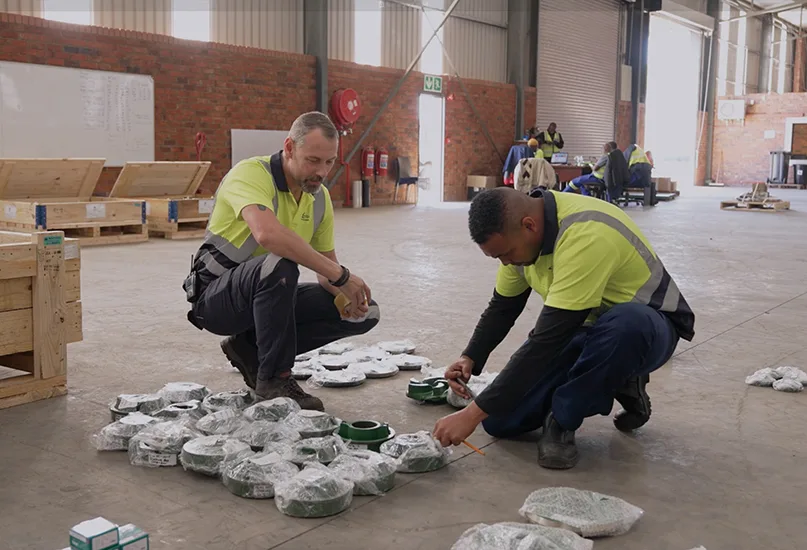
As it seeks to empower staff and recognise their important contributions, NML understands that logistics is a ‘people business’.
“We invest strongly in training and upskilling because our industry evolves constantly,” Clark informs.
As such, NML’s team is encouraged to understand the full supply chain – not just their individual role – when it comes to growing within the business.
Indeed, many staff have been with the group since its earliest days and grown alongside it.
A focus on teamwork and a positive working environment means individuals feel trusted to take ownership and make important decisions.
“At NML, recognition is not only formal; it comes through responsibility, inclusion, and knowing your contribution keeps a mine running,
“If our people grow, our group grows – simple as that,” Clark asserts.
Elsewhere, NML participates in corporate social responsibility (CSR) practices, particularly around education, as it recognises long-term economic participation is fundamentally linked to access by quality learning.
For this reason, its corporate social investment (CSI) initiatives are coordinated at group level, which has seen NML partner with Masibambane College and Community Centre in Johannesburg and Education Africa – an organisation specialising in early childhood development and marimba music programmes.
“Research consistently demonstrates that early cognitive stimulation is one of the most effective interventions for improving lifelong learning ability, curiosity, and ultimately employability and entrepreneurship,” she observes.
“Our approach is therefore not charity-driven, but capability-driven.”
FUTURE FOCUS
As it looks to the future, NML’s focus is on controlled growth.
Over the past three years, the group has experienced significant expansion across its corridors and service offerings, and its objective now is to continue this trajectory in a structured and sustainable way.
“We aim to strengthen our African corridor presence, expand our infrastructure support capabilities, deepen strategic partnerships with mines and original equipment manufacturers (OEMs), and continue building predictable supply chains in complex jurisdictions,” Clark details.
The group has also recently undergone a rebranding process, which reflects the maturity of the business and the integrated structure it has built.
“Our rebrand is not simply visual – it represents clarity of identity, alignment across our regional entities, and our commitment to operating as a unified supply chain partner across Africa,” she excites.
“Growth for us is measured in reliability, not just volume.”
One of the most humbling parts of NML’s journey so far is that its growth has been driven by people.
“Our clients have trusted us, our service providers have supported us, our employees have carried the business forwards, and the countries we operate in have welcomed us. Relationships, partnerships, and service have been fundamental to our success,” Clark acknowledges.
With Africa increasingly at the centre of global supply chains, particularly with a growing international focus on critical minerals from both Eastern and Western markets, its mining sector is booming.
“Regardless of where investment originates, these mines need stable supply chains – and that is where experienced regional partners are essential.
“We don’t believe we operate in Africa – we operate Africa,” Clark confidently concludes.
This company profile was produced by the editorial team at Africa Outlook, a publication within the Outlook Publishing global network of B2B industry magazines.
Outlook Publishing showcases organisations and leadership teams shaping sectors including manufacturing, mining, construction, healthcare, supply chains, food production, and sustainability.
Africa Outlook highlights organisations driving growth, innovation, and investment across Africa’s evolving business landscape.