



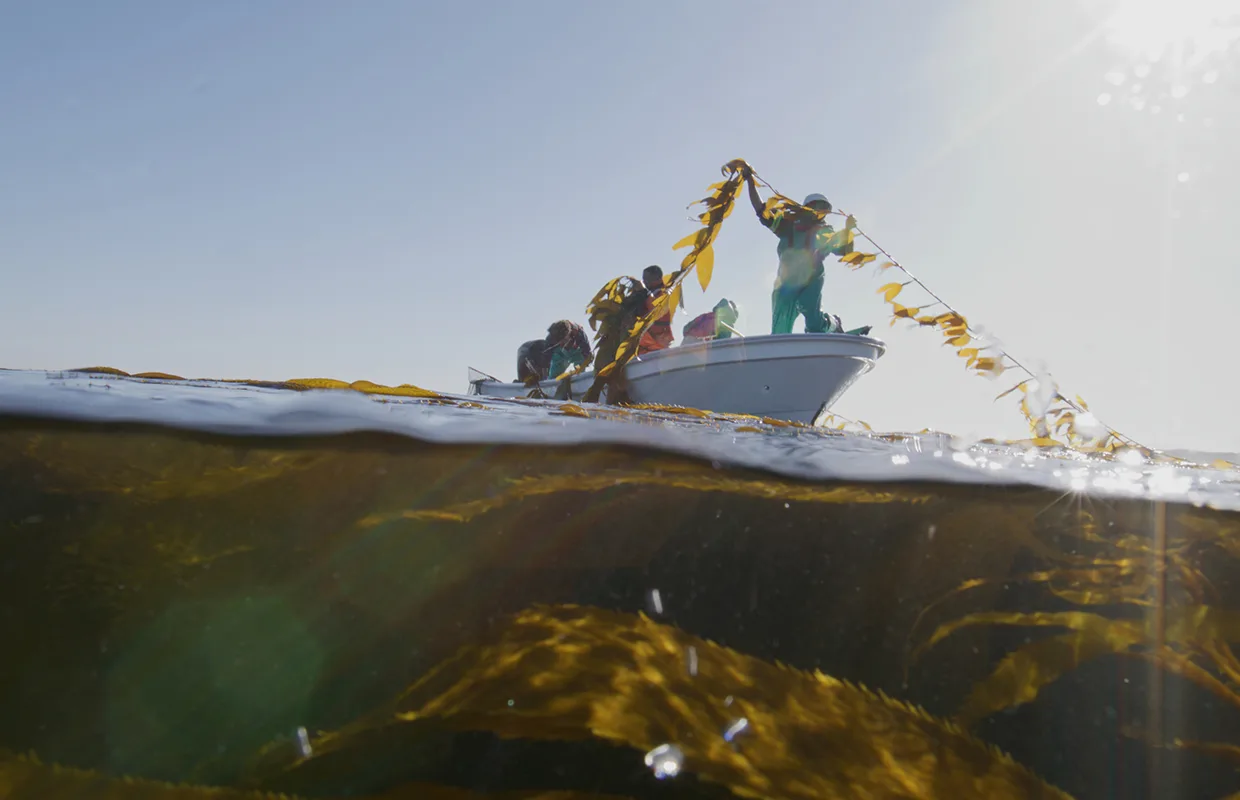
Kelp Blue is scaling giant kelp cultivation to restore ocean ecosystems, capture carbon, and produce sustainable biostimulants. By linking commercial growth with environmental impact, the company aims to prove nature-based solutions can drive both profitability and climate action, explains Caroline Slootweg, co-Founder.
Q&A WITH CAROLINE SLOOTWEG, CO-FOUNDER, KELP BLUE
Firstly, can you tell us about Kelp Blue’s passion for scaling a profitable nature-based solution that will help reverse climate change?
Caroline Slootweg, co-Founder (CS): At Kelp Blue, we cultivate giant kelp forests at scale to restore ocean ecosystems, capture carbon, and create a range of high-performing biostimulants to transition agriculture to more sustainable practices.
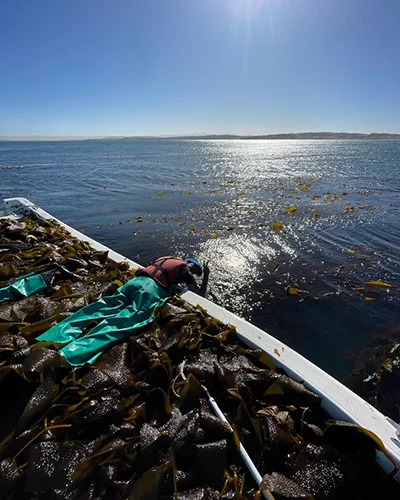
We selectively harvest the top 10 percent of our kelp canopy and process it into a seaweed biostimulant, StimBlue+. The remaining biomass stays in the ocean, where it continues to support biodiversity, improve ecosystem health, and contribute to carbon sequestration.
Our model is simple – the more biostimulant we sell, the more kelp forests we can grow. This creates a positive feedback loop where commercial success directly enables greater environmental impact.
Guided by our Four Returns framework – return on inspiration, social capital, natural capital, and financial capital – we believe profitability and environmental stewardship are not mutually exclusive. Our ambition is to demonstrate that nature-based solutions can be both commercially scalable and a meaningful force in addressing climate change.
Giant kelp is one of the fastest-growing organisms on the planet. Why is it well-suited for use in a range of products?
CS: As giant kelp grows, it naturally accumulates a rich array of bioactive compounds, minerals, and micronutrients from the ocean.
Using our proprietary mechanical processing technology, we can extract valuable components such as polysaccharides, fucoidan, and alginates without the use of harsh chemicals.
These natural compounds form the building blocks for a diverse range of products, from agricultural biostimulants to innovative biomaterials such as kelp leather and bioplastics.
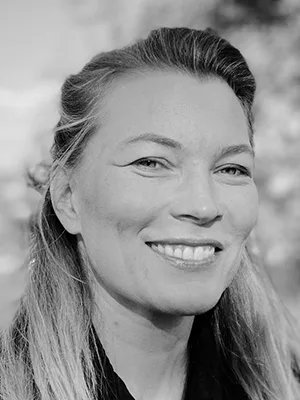
“Our model is simple – the more biostimulant we sell, the more kelp forests we can grow. This creates a positive feedback loop where commercial success directly enables greater environmental impact”
Caroline Slootweg, co-Founder, Kelp Blue
How is Kelp Blue restoring ocean ecosystems through large-scale giant kelp cultivation, helping to remove excess carbon dioxide (CO2) from the atmosphere?
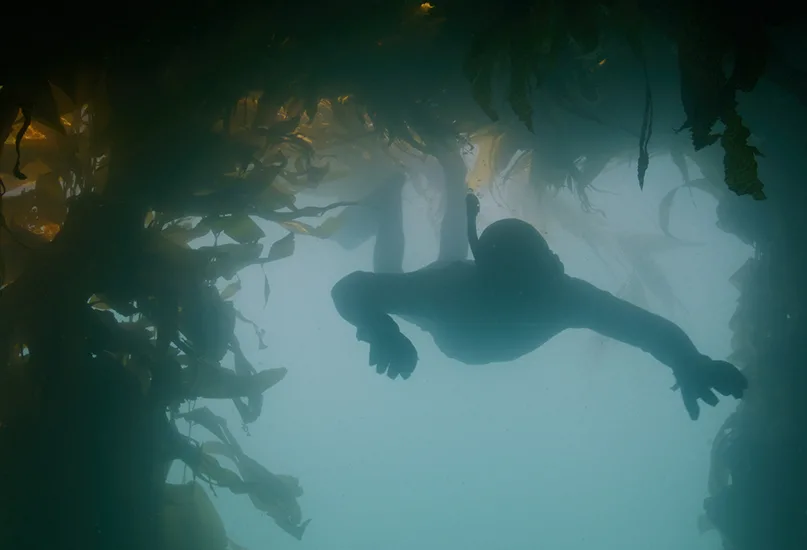
CS: Kelp Blue cultivates giant kelp forests in nutrient-rich offshore environments, creating new marine habitats that support biodiversity and help restore ocean ecosystems.
Giant kelp is often referred to as an ecosystem engineer because it creates complex underwater habitats that provide food, shelter, and nursery grounds for a wide range of marine life.
Through environmental DNA (eDNA) monitoring, we have already identified more than 800 species associated with our kelp forests, demonstrating their ability to rapidly enhance biodiversity.
Like all plants, giant kelp absorbs CO2 as it grows, converting it into biomass through photosynthesis. By scaling kelp cultivation, we increase the ocean’s capacity to capture carbon whilst simultaneously restoring marine ecosystems and producing sustainable products.
Can you outline your goal to remove over one million tonnes of CO2 annually by 2029 through giant kelp farms?
CS: By 2029, our goal is to remove over one million tonnes of CO2 annually through 70,000 hectares of Giant Kelp farms located 30 to 100 kilometres offshore from Lüderitz, Namibia.
These farms benefit from the nutrient-rich Benguela Current, which is twice as productive as the Chile Current and nine times more productive than the California Current.
This results in a 10 to 20 percent increase in regional fish stocks and biodiversity, creating over 400 local jobs and indirectly supporting 800-1,000 more.
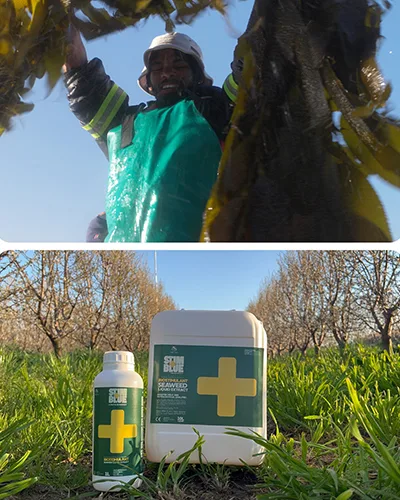
You also cultivate giant kelp to create a range of high-performing biostimulants, such as StimBlue+. How do they give farmers better yields, encourage sustainable agricultural practices, and improve soil quality?
CS: StimBlue+ is rich in naturally occurring polysaccharides, including mannitol, fucoidan, and alginates, which act as a food source for beneficial soil microorganisms.
By nourishing these important microbial communities, StimBlue+ helps create a healthier and more active soil ecosystem, improving nutrient availability and uptake by the plant.
The result is stronger crop performance, higher yields, and improved crop quality. By working with natural biological processes rather than relying solely on synthetic inputs, StimBlue+ helps farmers build healthier soils and adopt more sustainable farming practices over the long-term.
“Kelp Blue cultivates giant kelp forests in nutrient-rich offshore environments, creating new marine habitats that support biodiversity and help restore ocean ecosystems”
Caroline Slootweg, co-Founder, Kelp Blue
Can you explain how Kelp Blue’s model can quickly grow across different markets, helping to change the environmental course of multiple industries?
CS: Kelp Blue’s cultivation model is designed to be scalable and replicable across geographies. We cultivate giant kelp in offshore environments using engineering methods that can be adapted to different suitable marine locations around the world.
This allows us to expand beyond Namibia, where we are currently operating, and replicate our cultivation approach in new regions.
We are actively working on deploying our cultivation methods in different parts of the world so we can have a bigger impact across the globe, both in terms of ecosystem restoration and the production of biostimulants for agriculture or other biomaterials.
This scalability is key to our ambition of transforming multiple industries through nature-based solutions.
How did winning the Climate Action category of the 2024 edition of the Zayed Sustainability Prize help Kelp Blue grow its projects, credibility, and network?
CS: Winning the Climate Action category of the 2024 Zayed Sustainability Prize has been a strong accelerator for Kelp Blue. It has directly supported our ability to scale, enabling us to expand our kelp forests in the ocean, which in turn increases biodiversity and enhances carbon sequestration.
Just as importantly, the award has strengthened our credibility. It provides independent recognition of our approach from a respected global platform, which reinforces confidence amongst both industry stakeholders and existing clients.
This combination of validation and visibility has helped us grow our network, open new conversations, and advance our mission to scale nature-based solutions globally.
Finally, what are Kelp Blue’s key priorities for the future in order to continue rewilding the oceans and transitioning agriculture to sustainable practices?
CS: Our key priorities are focused on scaling both impact and reach. Firstly, we want to plant more giant kelp forests to continue restoring ocean ecosystems and increasing biodiversity and carbon sequestration.
Secondly, we are focused on expanding and strengthening our new cultivation sites to ensure the model is truly globally scalable and can be replicated across different ocean environments.
Finally, we are committed to growing our commercial impact. We are already selling our seaweed biostimulants across six continents, and we want to deepen those partnerships, strengthen existing markets, and bring more seaweed-based products to market to further support the transition to more sustainable agricultural practices.
This article was produced by the editorial team at Africa Outlook and published as part of the Outlook Publishing global network of B2B industry magazines.
Outlook Publishing delivers industry insights, company stories, and sector coverage across manufacturing, mining, construction, healthcare, supply chains, food production, and sustainability.
Africa Outlook provides ongoing coverage of organisations and developments shaping industries across Africa.