



In South Africa, early childhood development centres are harnessing innovative, sustainable construction methods to create brighter futures and cultivate equitable environments for generations. We explore how Natural Building Collective weaves the threads of community and sustainability together.
REDEFINING ARCHITECTURAL POSSIBILITIES
In the vibrant tapestry of South Africa (SA), early childhood development (ECD) centres play a crucial role in nurturing childhood advancement, particularly in underserved communities.
Establishing the groundwork for lifelong learning, these centres emphasise physical, cognitive, emotional, and social development to enhance access to quality education.
Additionally, they promote parental involvement through skills enrichment workshops and support educators with training programmes to create effective learning environments.
This prepares children for future educational success and fosters healthier communities through a holistic approach that combines early learning, nutrition, health, and emotional well-being, embracing play-based curricula to develop essential skills such as language and problem-solving.
Amidst the education sector’s funding and structural challenges, Natural Building Collective and its partners are actively facilitating the construction of ECD centres and redefining architectural possibilities.
It is dedicated to promoting and practising sustainable building methods which emphasise the use of natural materials and environmentally sound techniques.
These often include tyres, cob – which consists of sand, clay, and straw – and ecobricks, ingeniously crafted from plastic bottles densely packed with clean non-recyclable plastic waste, all aiming to reduce reliance on conventional, non-renewable resources.
Constructing buildings from such materials is an innovative approach to sustainable architecture, leveraging waste materials to create durable, eco-friendly structures.
Typically focusing on education and community engagement, Natural Building Collective offers workshops, training sessions, and resources for individuals interested in their own projects. It aims to raise awareness about the benefits of natural buildings, such as improved indoor air quality, energy efficiency, and a smaller ecological footprint.
By fostering a community of like-minded individuals and professionals, Natural Building Collective encourages collaboration and innovation in the construction industry, ultimately striving to create healthier living environments that harmonise with nature.
ECO-FRIENDLY EDUCATION
The lack of access to ECD centres in areas like Cape Town, particularly in communities such as Heideveld, not only disadvantages children in their educational journey but also contributes to long-term societal issues.
To break this cycle, the construction of a new Montessori ECD centre by Natural Building Collective is taking shape. Built in collaboration with Greater Commission United and Uthando (Love) South Africa, the Goal50 Edu Hub aims to empower local youth and educators.
Its design has a creative twist and is a thoughtfully planned, sustainable space that will provide essential support to the local community.
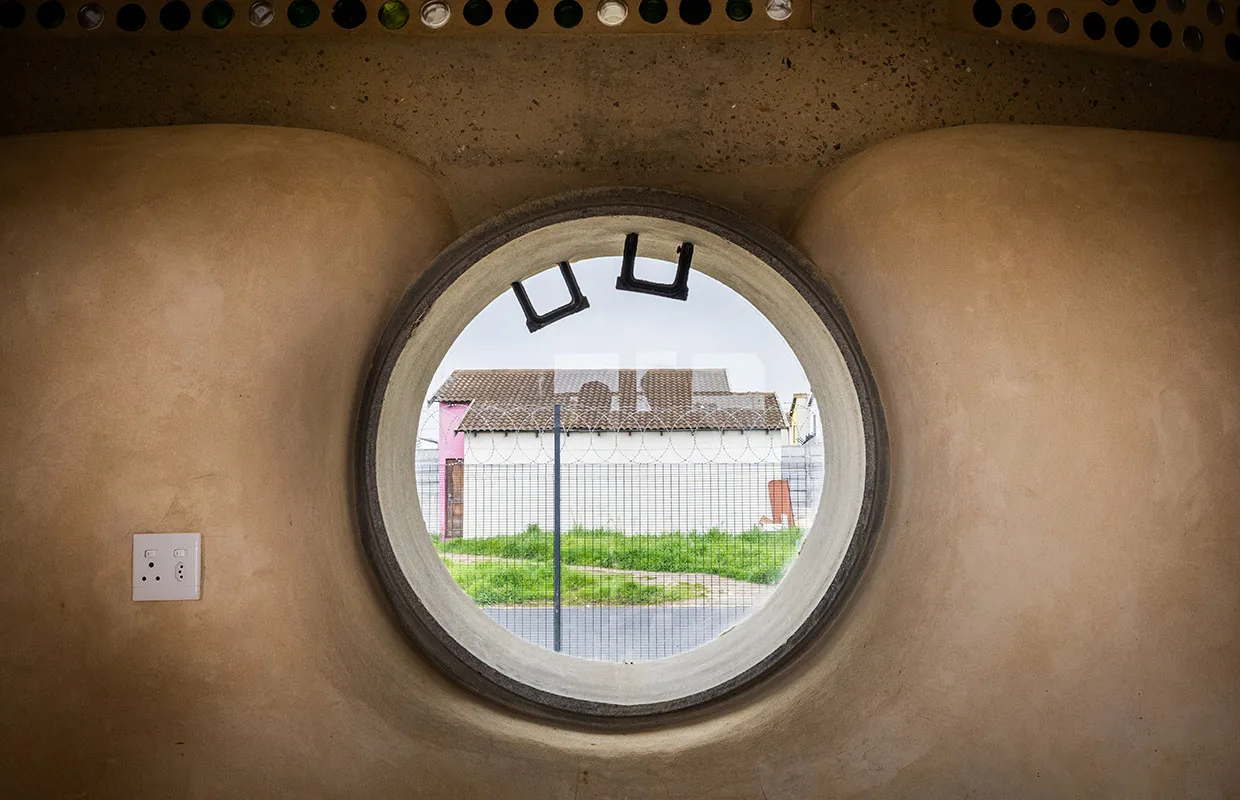
Incorporating 5,000 rammed-earth tyres, the walls will be formed with ecobricks and glass bottle details, cob, and natural plasters.
Spanning 750 square metres, it will encompass two outdoor play areas equipped with astro-turf, natural landscaping, and a jungle gym.
The facility will include four generous classrooms, an administration annexe with office and reception areas, and a service building – with the first floor serving as a residential unit for the school principal.
The design prioritises climate change considerations by using sustainable building materials and techniques that establish a new standard for environmental responsibility.
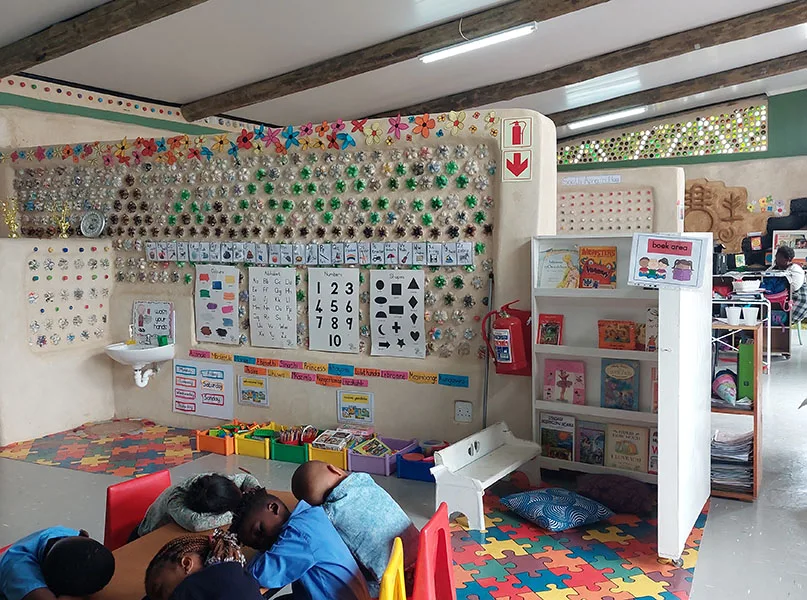
The interior will be meticulously crafted to inspire and stimulate young minds, creating a nurturing and engaging environment for early learning.
More than just buildings, sustainable ECD centres are a beacon of hope and a catalyst for change.
By establishing a state-of-the-art centre in Heideveld and elsewhere across SA, Natural Building Collective is setting the standard by providing essential and environmentally-responsible infrastructure for the community.
TRANSFORMING LIVES
Natural Building Collective boasts a notable history of undertaking transformative projects, most prominently for the non-profit organisation Ulwazi Educare in Delft, Cape Town.
The school strived to provide the necessary facilities to give the children a positive start in life, but was stifled by financial constraints. As a result, it has been reimagined by Natural Building Collective to support an ECD centre.
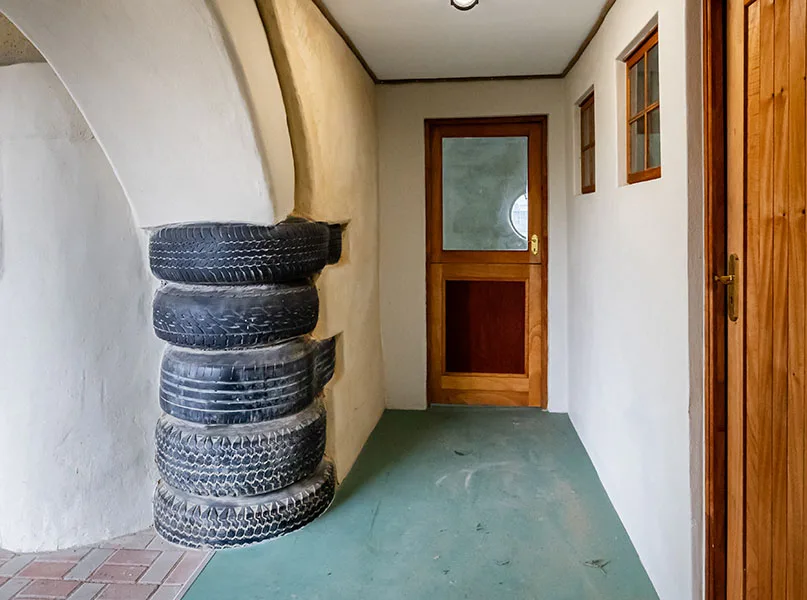
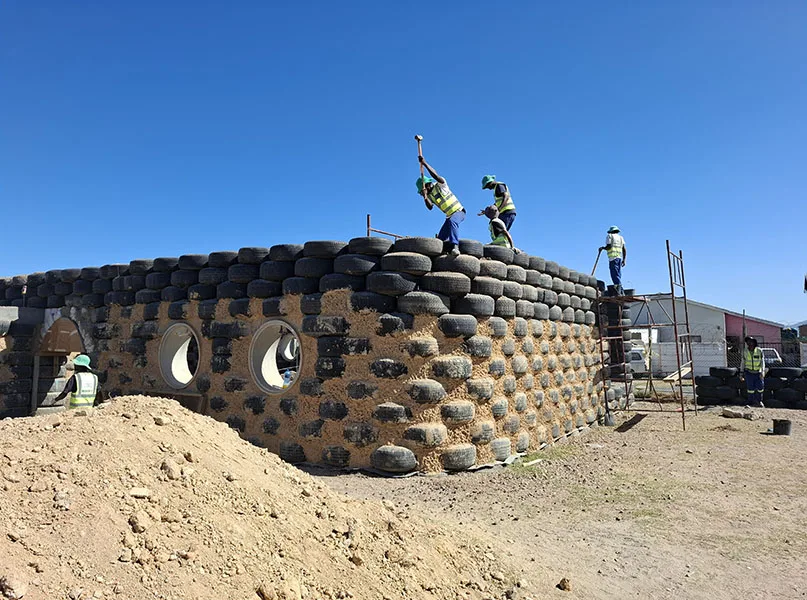
Currently recognised as the largest tyre building in SA, it was designed in collaboration with award-winning sustainable architect Paul Marais and demonstrates the innovative use of natural materials, most of which are recycled and reclaimed.
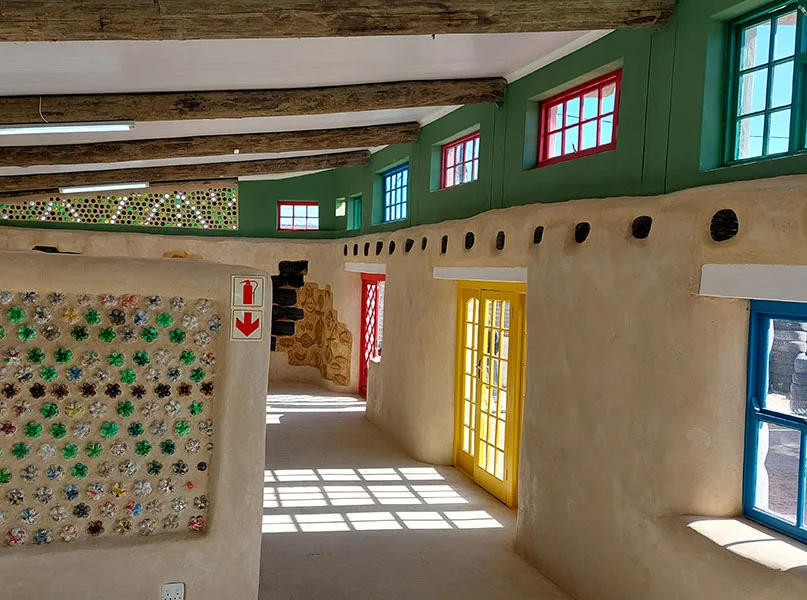
The classrooms began as repurposed and refurnished shipping containers until Natural Building Collective became involved and rebuilt them, alongside the ECD centre, utilising tyres, ecobricks, cob, glass bottles, bricks made from the recycled film industry waste, and reclaimed doors and windows.
Moreover, it will expand its use to cater to senior citizens, community outreach programmes, and support groups, continuing the narrative of sustainability and renewal.
The tyres are arranged in rows and compacted with earth until they become solid, and to ensure uniformity, all tyres in each row are chosen to have the same depth.
The fill material used for the tyres is a mixture of recycled building rubble and earth sourced from an excavated site, which allows for easy compaction.
For packing the walls constructed with tyres, cob, and ecobricks, materials were sourced through outreach efforts to local schools and individual donations. Additionally, glass bottles were obtained from a recycling firm.
Exterior walls are coated with an earthen plaster reinforced with cement to ensure ease of maintenance, whilst interior walls feature lime plaster.

BUILDING A BRIGHTER FUTURE
The costs of conventional construction are typically externalised, meaning a lot of the work is done off-site in terms of manufacturing materials such as bricks and cement.
This process does not directly benefit local communities, as factories are often not near the building site.
In contrast, sustainable building requires a far greater proportion of the work to be carried out on-site. As tyre building requires a lot of physical work, more local people are employed for the duration of the project, learning new skills. Furthermore, the money goes where it is really needed – to the community.
Many sustainable materials can be sourced locally, minimising financial and environmental costs. They enhance comfort with natural thermal efficiency and, when combined with passive solar design, help to regulate indoor temperatures year-round by generating a significant portion of their own energy through smart material use.
Historically, the construction industry has been a major energy consumer and greenhouse gas (GHG) emitter, with cement production the third largest global source of anthropogenic carbon emissions following fossil fuels and land-use changes.
Utilising a hybrid of natural and recycled building materials and sustainable techniques can thereby reduce GHG emissions and foster vital infrastructure that benefits communities.
As a result, sustainable buildings have a lower carbon footprint not only during construction but also throughout their lifespan. By nature, they create a more positive social impact as they do not depend on materials with high embodied energy, thereby contributing to local job creation.
The Goal50 Edu Hub building, along with others like it, will serve as a showcase for innovation and eco-friendly construction practices, proving that sustainability and community development go hand-in-hand, fostering a legacy of positive change for future generations.
Through such visionary projects, Natural Building Collective is not merely constructing buildings; it is laying the foundations for change, transformation, and uplifting communities, one brick at a time.
INNOVATIVE AND SUSTAINABLE TECHNIQUES
Ecobrick construction:
- Walls and insulation – Plastic bottles can be filled with sand or other materials to create dense, insulated walls. These bottles are typically stacked and plastered over to form stable walls that provide insulation against heat and sound.
- Benefits – Using plastic bottles helps reduce waste and offers a cost-effective building solution. Bottles can be sourced cheaply or even for free from local communities, thereby promoting recycling.
- Design flexibility – Structures made from plastic bottles can be designed in various sizes and shapes, allowing for creativity and customisation in architectural design.
Tyre construction:
- Rammed earth technique – Used tyres are often filled with soil and stacked to create walls. This method, sometimes referred to as ‘tyre building’, provides substantial thermal mass, which helps regulate indoor temperatures.
- Strength and durability – Tyres are incredibly durable and can withstand harsh conditions. When compacted and covered with stucco or earth, tyre walls can last for many years.
- Environmental impact – Utilising old tyres helps mitigate the environmental issues associated with tyre disposal, reducing landfill waste and pollution.
Both methods emphasise local involvement and eco-friendliness, offering workshops and volunteer opportunities that allow community members to learn and participate in the building process.
This approach not only fosters skill development but also builds a sense of ownership and connection to the created spaces.